🇺🇸
When you think of lost cities Atlantis usually comes to mind. The tale of human hubris leading an angry Poseidon to damn it under the sea. The mystic city seemingly punished for it’s radiance by a jealous god. And whilst Plato (probably) never visited Argentina, his tale seems to have come to life here.
We happened upon this tale on our way out of Buenos Aires, after having crossed Tandil. We were arriving late into town with ambitions of camping, but here angry gods and poor judgment gave us our first big fright of the trip.
We arrived in Carhue, the next town over to Epecuen, intent on making camp. The high rate of inflation in Argentina pushed us out of hotels and into the camping life. Ever changing prices meant that we were never quite sure what we would find. Even camping at times was unaffordable, a 20€ bill per person to pitch a tent seemed a crazy demand for us and so with only a few hours of sunlight left on the clock we pushed to try for a different camping ground. Before setting off on this journey we had decided on a 4×4 car. It seemed a safer option to prepare us for whatever may lay in front of us. But offroading is a skill not easily or quickly learned, and like many skills it is one that is also learnt by failing at it.

The destination did not seem impossible to reach though, we were trying for the municipal camping on a road that started off muddy but practicable. The subtle hints and signs of deeper mud were not yet familiar to us at that time, and for a good while we passed the puddles and the mud comfortably, and having fun at it too. The feeling of coolness did not last though. Suddenly we found ourselves loosing our traction, and the mud sucked us firmly into position. I got out of the car, feet deep into the mud, got the shovel out and tried frantically to give our wheels something to hold onto to get us out. Rocks, wood planks and bricks did nothing to help lift us up; and the angry army of mosquito refused to pitch in for help.
In situations of panic, any behaviour that is only learnt in theory but never practiced seems to fly out the window. Here I would spend many hours in my mind again later, thinking of all I could have done differently. After an hour of futile efforts that cost me a shoe and a week-worth of mosquito bites we finally gave up, the dawning light receding as fast as our courage. We settled inside the car, convinced that we would spend the night in dread and discomfort half buried in the surrounding mud.
We had always joked that one day or another we would have to spend the night in the car, the humor of it a pale comfort to our predicament. We tried to keep our morale by making plans for how we could reach for help the following morning. In despair we even tried calling local garages to see if we could arrange a tow for the next day, to no avail. The light faded more and more and deep darkness set out to assail us; the black windows giving no hope around us. I felt defeated, by both my lack of skills to get us out of this situation and for putting us in it in the first place. But if I can take at least something out of my medical training, it is to not give up whilst the game isn’t fully played. I couldn’t let fear shame and guilt get the better of me here and now. So I steeled myself, tried out to find the most comfortable position possible sleeping at the wheel and after a good half an hour of trying to squish the 30 something mosquitoes that wanted to be roommates we set out to rest.

Suddenly – lights flashing up in the distance behind! Car lights seemed to be coming closer slowly and brought us new hope. My brain was jolted into action, we set off every light we could in the car, and I got out to wave our potential saviour over. In the deep mud, surrounded by a now familiar cloud of mosquitoes as thick as pudding, I waved my lights back and forth to try and bring attention to us. To our great relief it worked, and the pickup truck stopped just before of the lake Anteater was sitting in.
We had only been in Argentina for a couple of weeks at this point, and I had not spoken a word of Spanish before that, I had no education in it other than watching Spanish-language telenovelas with my grandmother when I was young, not yet translated to Brazilian. In Buenos Aires and Tandil I was able to make do with “Latinish”, a mix of French, Italian and Portuguese. But here, in Carhue, discussing with the farmer who had stopped to rescue, I was completely out of my depth. The gesticulations and poor translation were enough to convey our sense of despair. We spent a few minutes walking around and he seemed uncertain of his ability to help. After a little while he set out saying something beyond my understanding, leaving me unsure if any further help would come.
Now, you know the ending of the story, the fact that we are writing about it probably clues you that the journey continued, but for us, there and then had a feeling of a very premature ending. Having spent months trying to get our car in shape only to see it sink a few weeks into it. The minutes seemed endless and half an hour later an eternity of doubt had set in quickly. Still against our growing doubt the lights of a tractor came to break up the night’s obscurity. The red sputtering machine, seemingly out of a different century, came trudging along to our rescue. Our saviour had not forsaken us, but instead had come to rescue us to the best of his means, speed just wasn’t one of them. I jump back into the surrounding mud, excited about the possibility of a rescue, to get my hands dirty with the practicalities of it. The long ropes are hooked up to the car, the engine of the old tractor roars and in a flurry of engine noise Anteater pops it out of it’s place with a satisfying plop.
The car, still half covered in mud, is sputtering and running, it’s engine is alive and kicking. Slowly we start to drive it around, clear of the obstacle. Our saviour offers to help guide us along back to safety through the rest of the mud traps on the way out. The drive is intense, jolted by adrenaline I examine every single sound the car makes, wondering if this event will leave lasting issues, slowly ticking us away. We come back to civilisation through the familiar lens of street lights slowly bleeding their yellow into our windshield. The car ahead comes to a stop, and through a complex blend of Argentinian Spanish informs us of where we can stay for the night. Unwilling to accept any form of monetary payment we still push on him and his wife the last of our Tandil cheeses, the best we had seemed too little a reward him but still that felt entirely insufficient to compensate for the rescue. We make our way to shelter for the night and surprisingly after a long hot shower I fall asleep quickly, exhausted beyond anxiety.
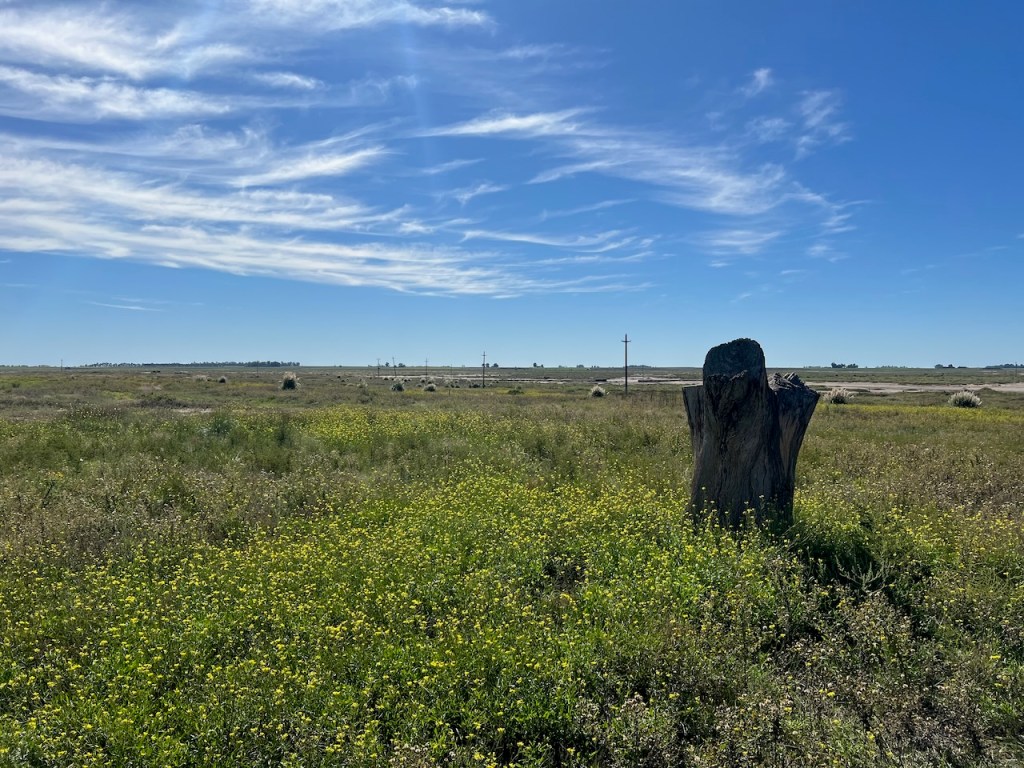
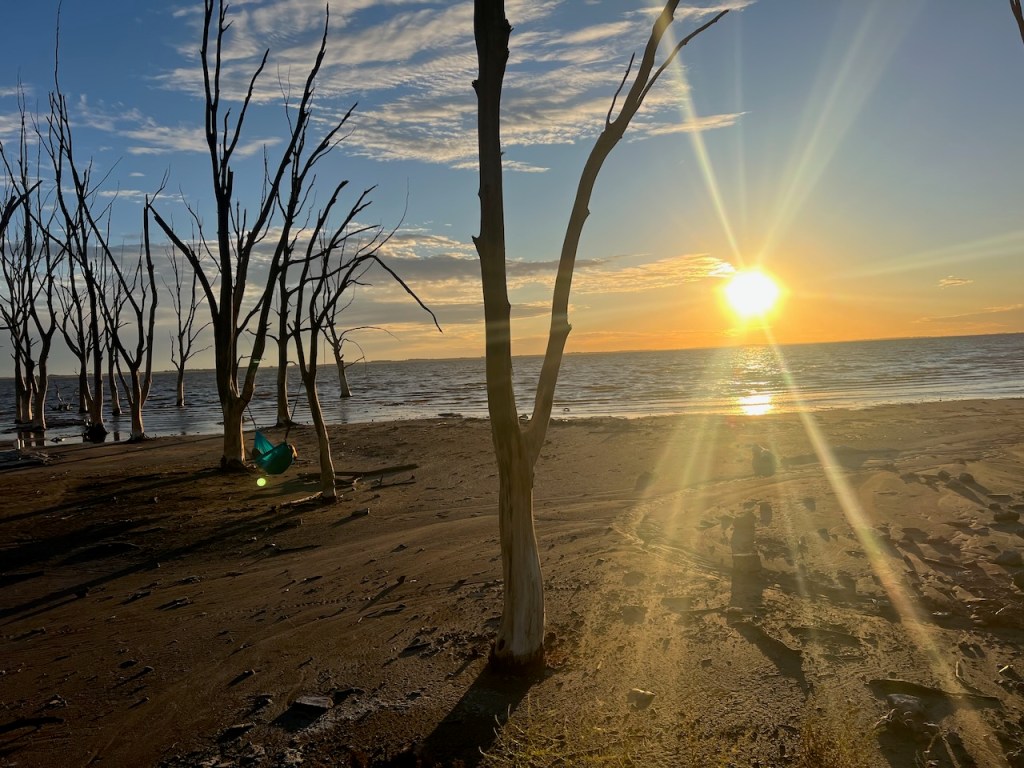
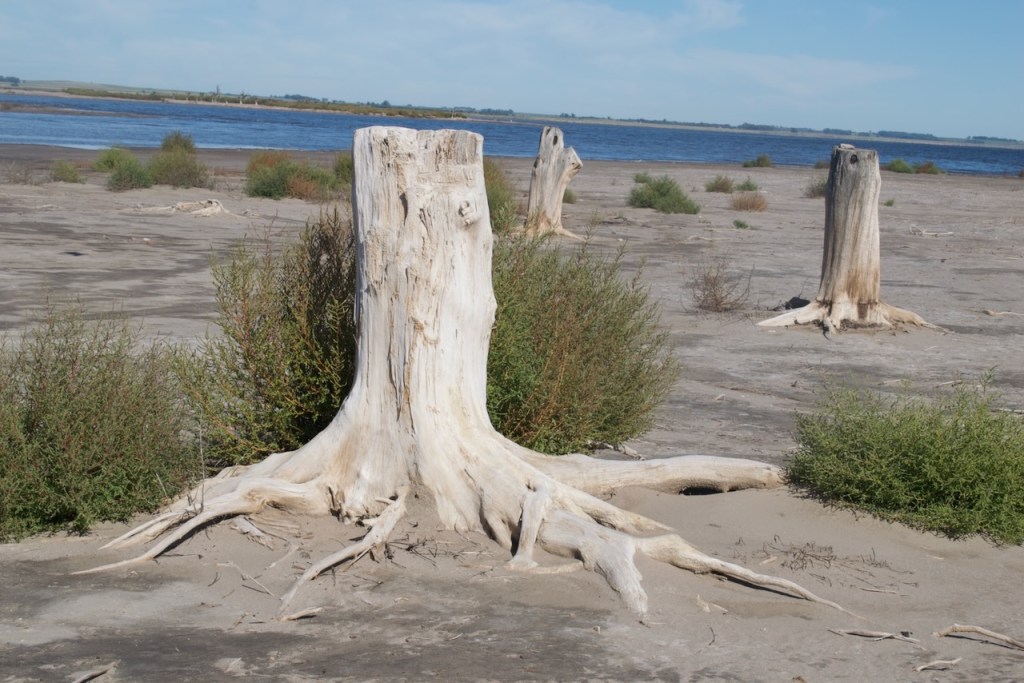
Morning comes and my brain gets back into track. The first couple of hours are spent testing and probing everything I could in the engine to make sure everything runs. I can find no fault and after a thorough washing down it purrs like it ever has. The test today will be to make it to the sunken city of Epecuen, the place we had come here for initially. We drive along the salty lake, the second saltiest after the dead sea according to the locals, to the sights of flamingoes and other birds peckering their meal of salt water shrimps. Soon we reach the petrified remains of a forest, the trees having spent decades under the salty sea now bared white and nude against the sun. The unsettling feeling of still life, of paused existence is further reinforced when reaching the first stop on the route.

Before you get sight of the sunken city itself, you find on the only road leading to it the “Matadero”. An overly architectured slaughterhouse. The Art-Deco husk stands above the surrounding landscape, the concrete tower now home to migrating birds cuts startkly through the flat landscape around. The building itself inspires a sense of confusion, of wonder as to why and how such a large construction was needed. The interior, although closed off, lends itself to a macabre imagination of industrialised slaughter on a scale that seems to big for the populace it serves. This building is just as much a statement as a function, of the pivotal place of cattle in the Argentinian life. Now, defunct and partially destroyed by time it takes on a new role, obscured behind the instagram pictures.


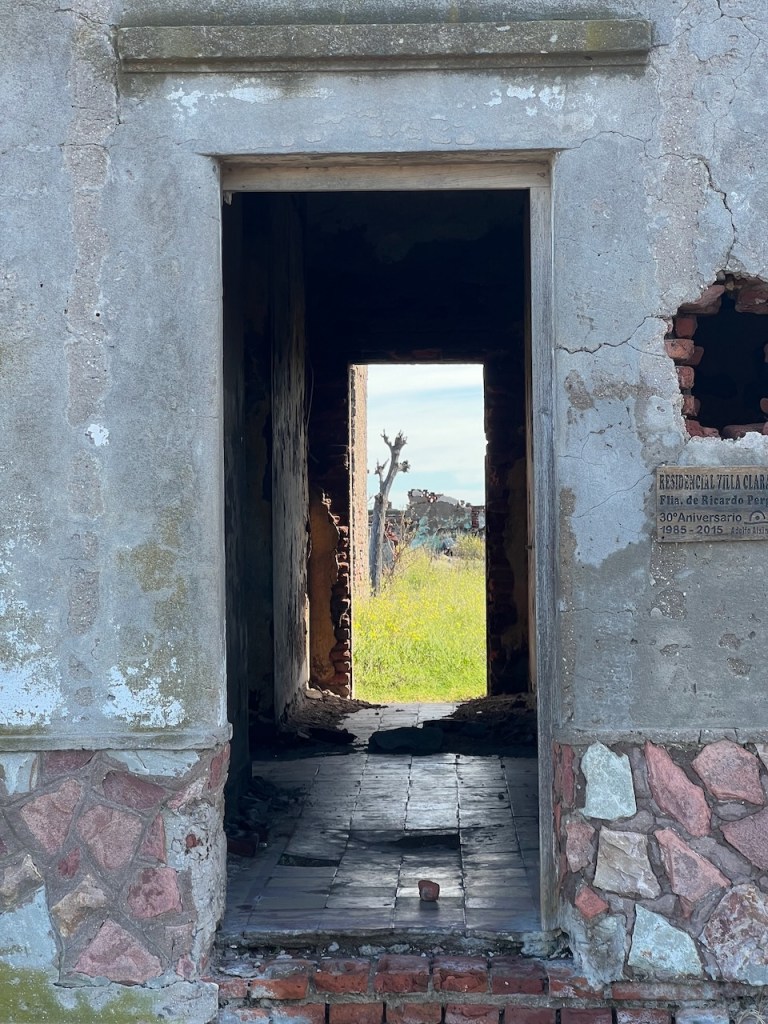
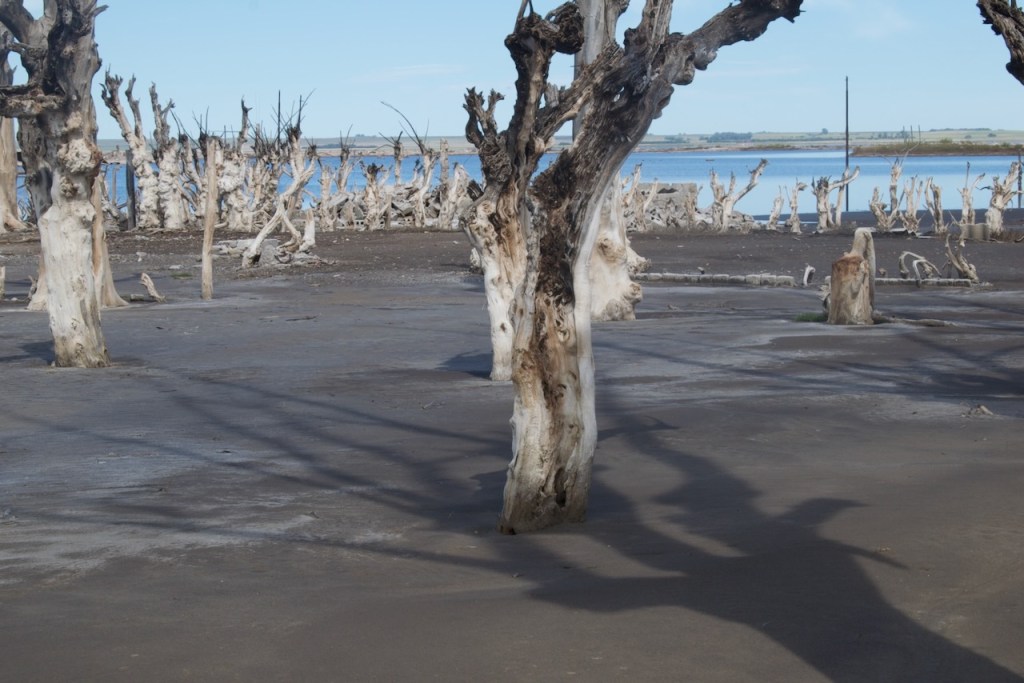
We drive off further around the lake, reaching the city of Epecuen itself. After we pay the entrance fee, a few thousands each, we make our way into the city proper, starting with the main avenue. Epecuen was a haven for the Argentinian nobility seeking refuge from the hustle and bustle of Buenos Aires. A now defunct train-line would bring about what the country could call royalty to bathe in the salty water of the nearby lake, and enjoy fine dining and luxury hotels. Walking the main avenue we see the husk of that previous life, in the delapidated remains of the hotels and restaurants, of which only the structure and the delicate tiles still hint towards that previous life. As for Atlantis it all happened so quick that those leaving had no time to pack. A dam breaking away caused a dramatic rise of the water level, engulfing the whole city deep under brackish waters. Thankfully the people had time to evacuate but their belongings would be entombed for two decades. Decay happened slowly underwater, and as the metal rotted away the shell of the city whitened and was washed of it’s human activity.
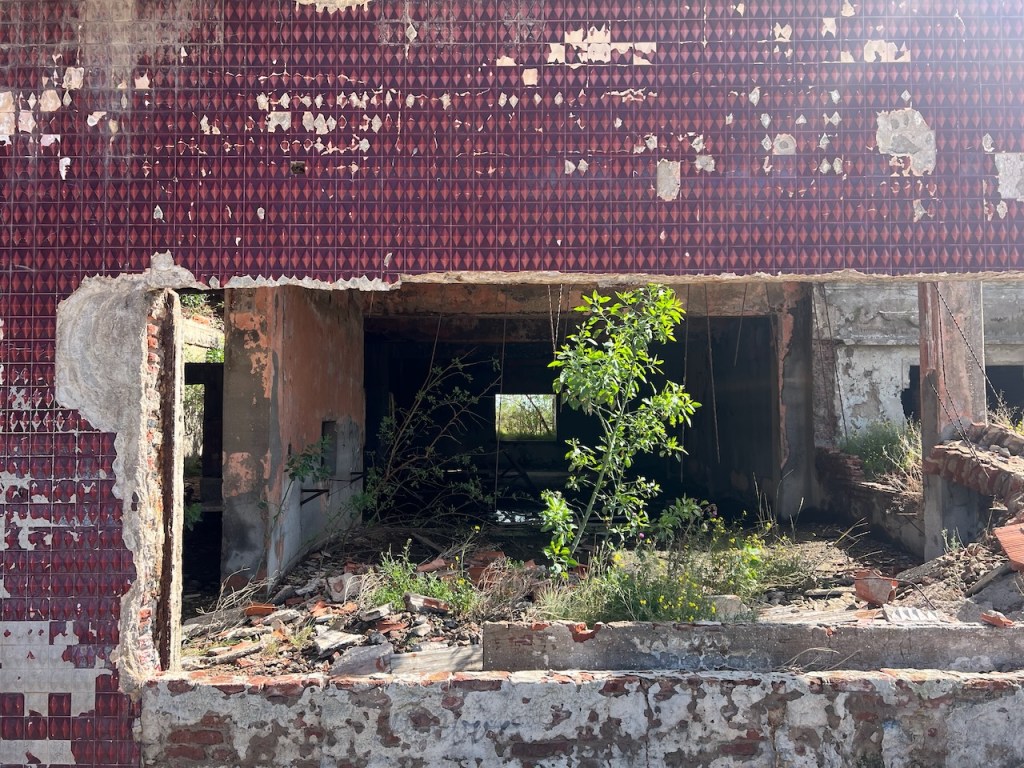


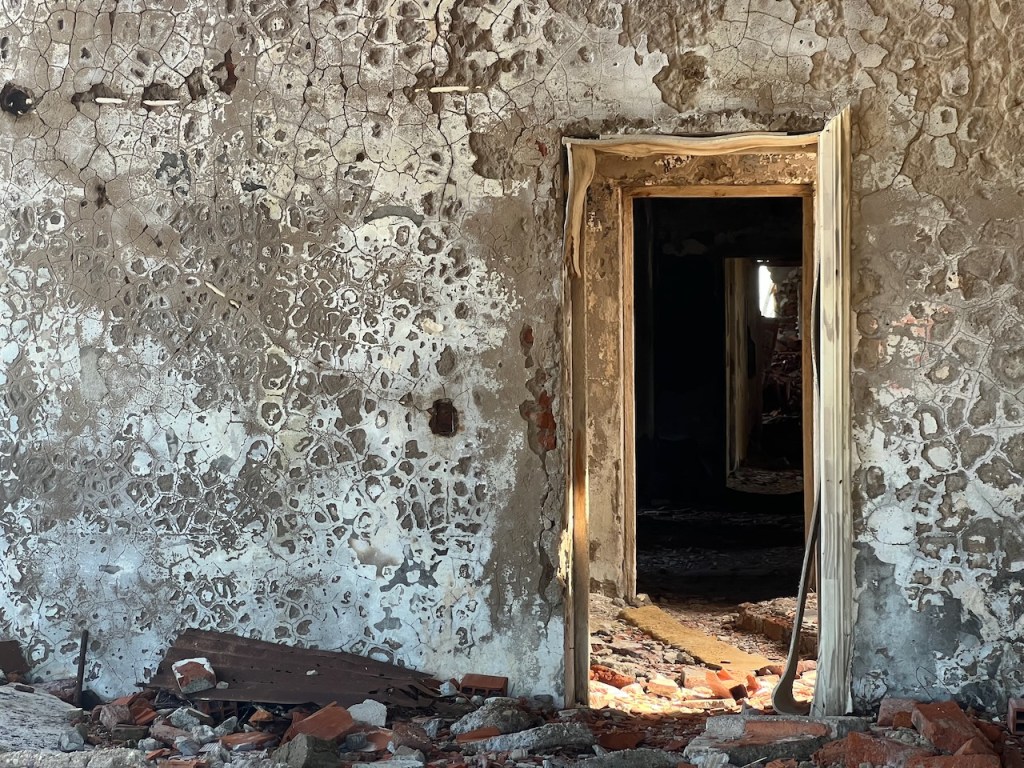
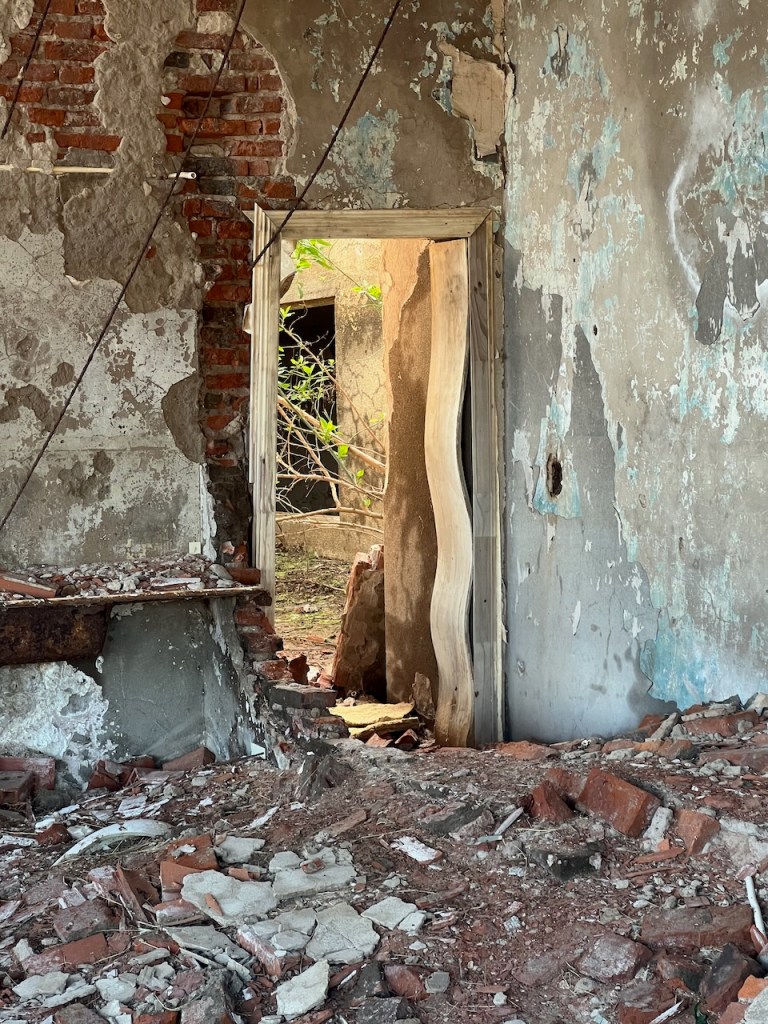


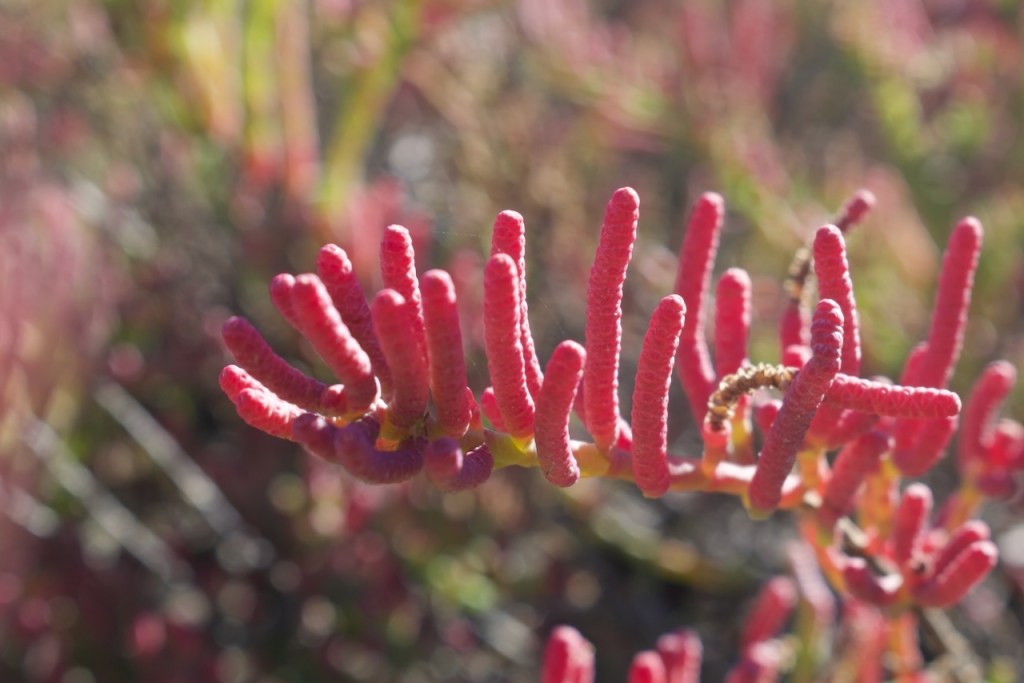
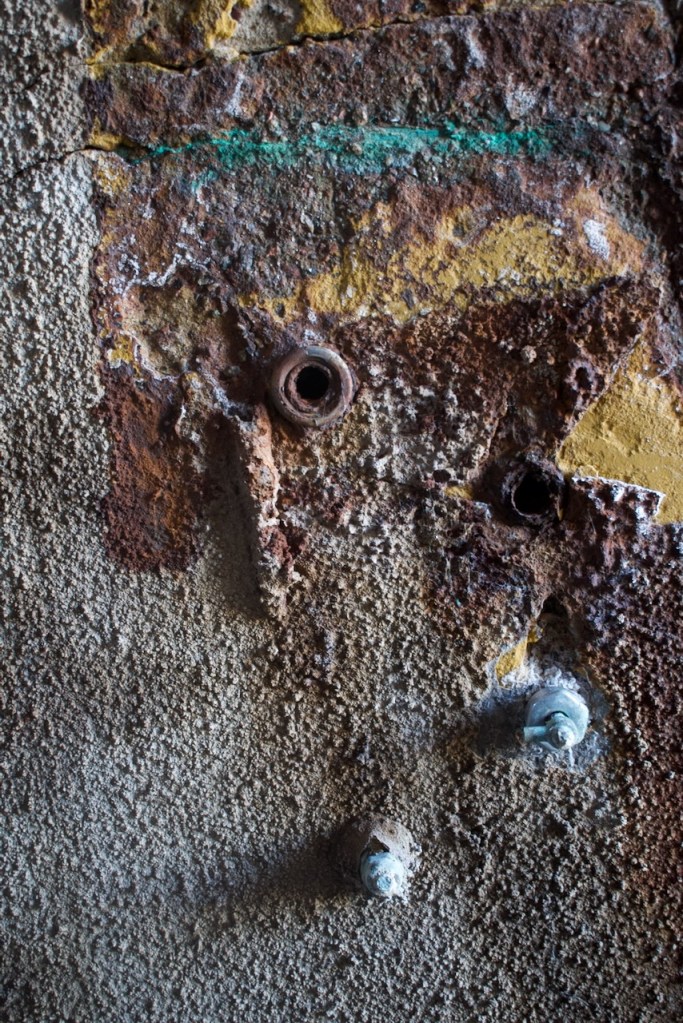
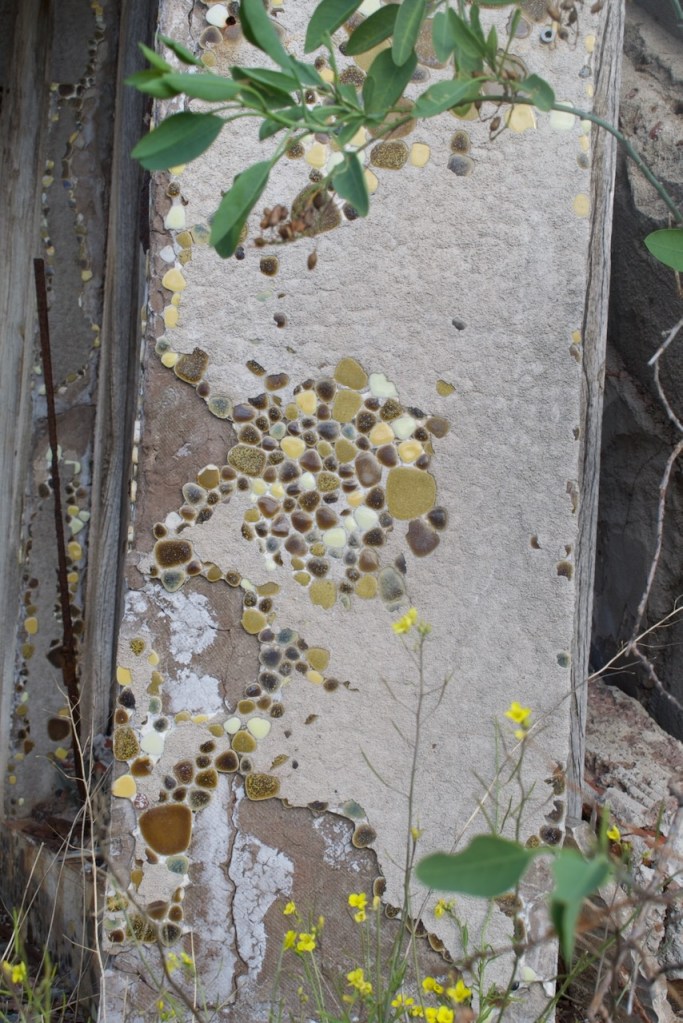
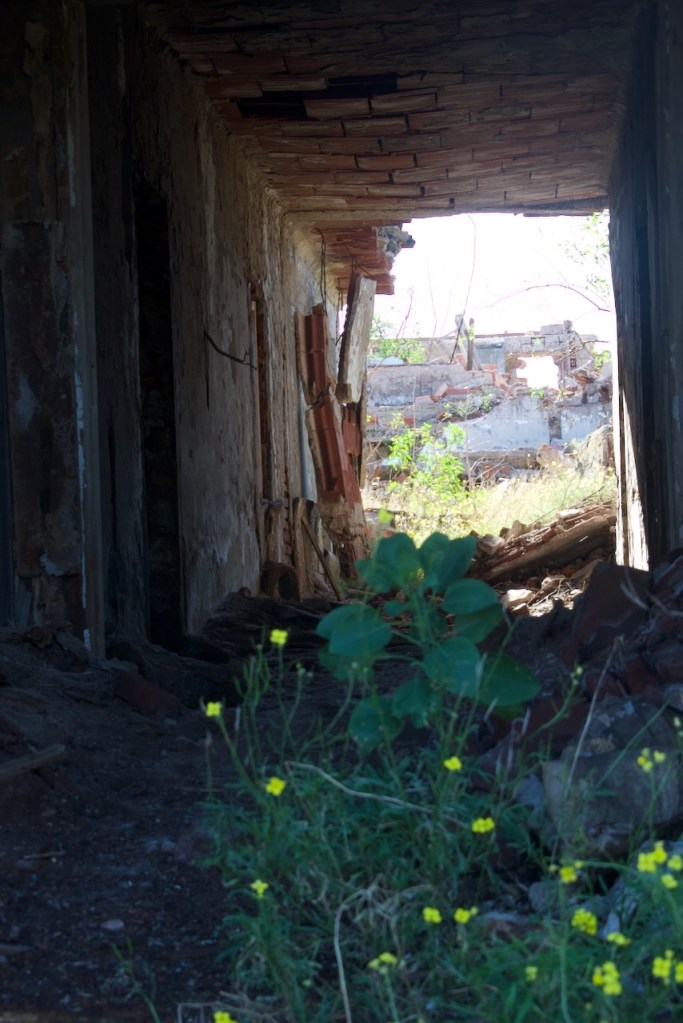
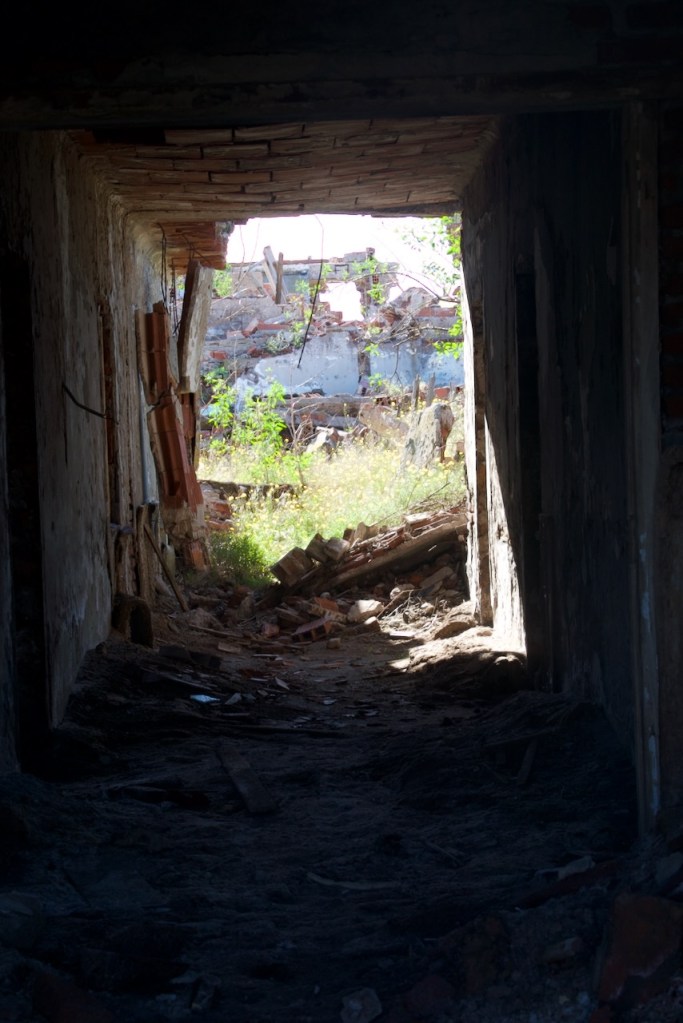
Walking through the city there is a poetic irony to a city built to master and bend the river water to the benefit of it’s rich clientele would take it all away and submerge it. We arrive down by the pools themselves, a sprawling complex of geometric spaces now sinking into the ground. The size of it calls to mind a busy activity, an image of hot summers and kids running around whilst their parents sip the latest cocktail à la vogue. The 50s esthetic is an invisible influence here. Stripped of their iconic plastic chairs and polka dot dresses the skeleton still somehow retains a nostalgia. As if the place itself was still expecting the crowds to rush back in once more.


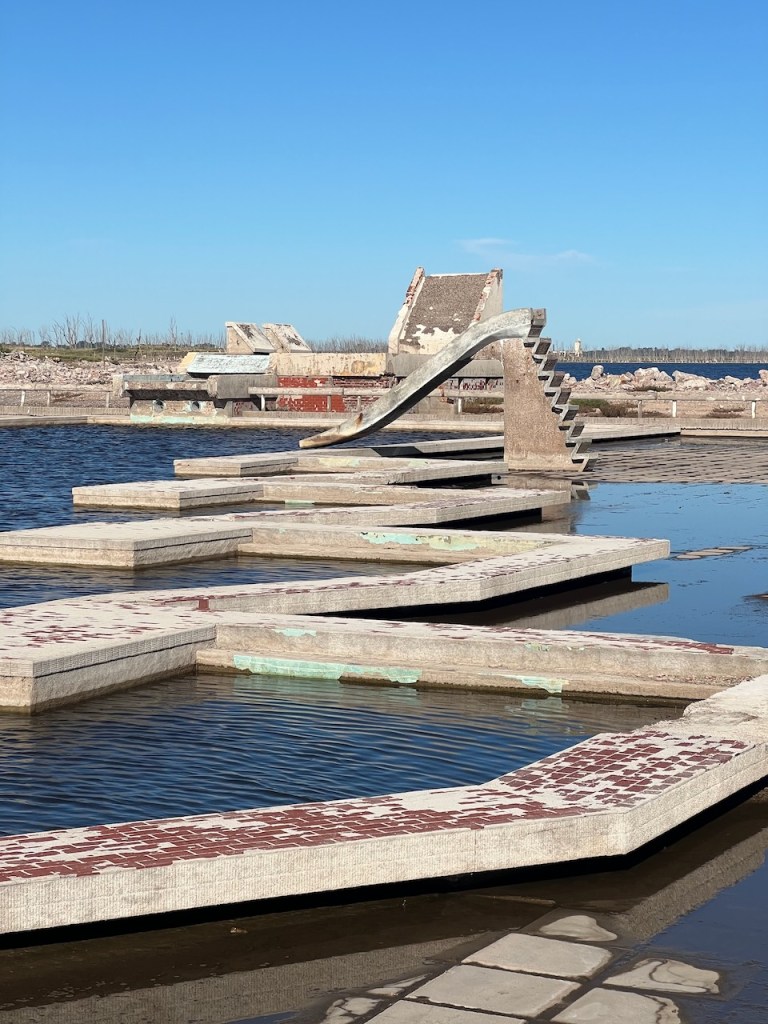

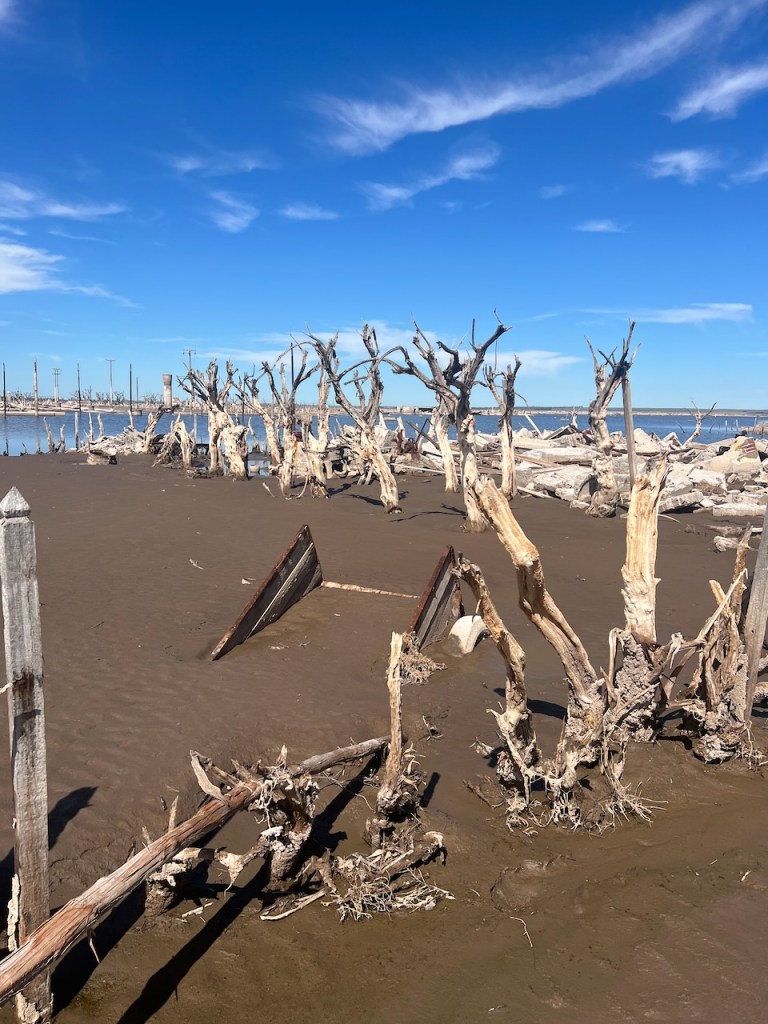
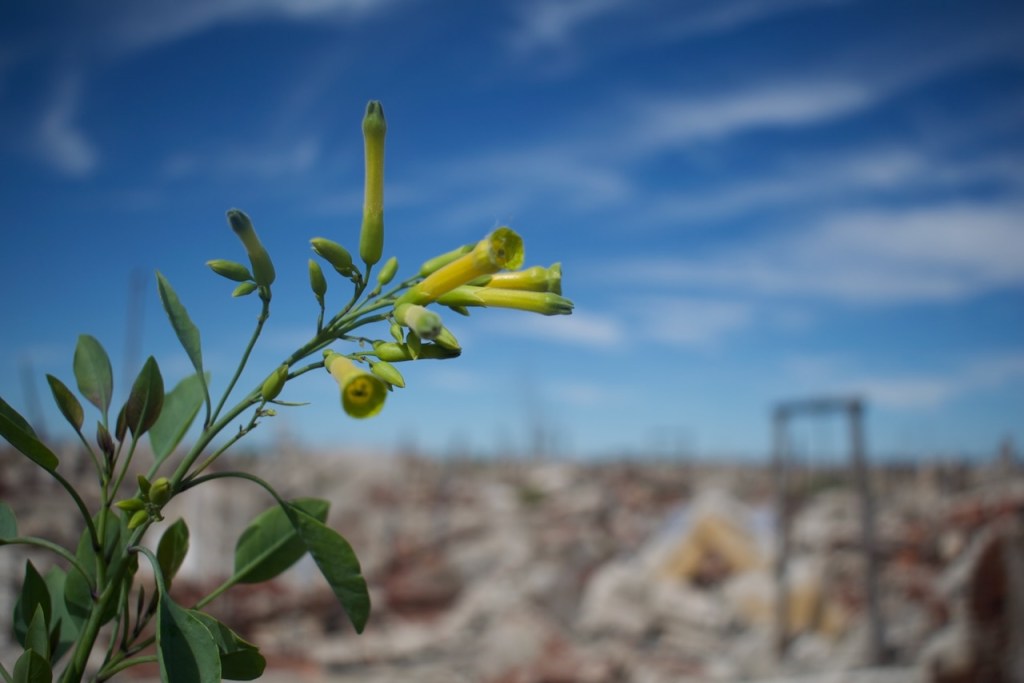
We visit the white streets, the occasional flooding obliges us to modify our path many times, sometimes even having to climb over the ruin to traverse it. Oftentimes we find ourselves surrounded by water where previously stood a leisurely avenue, the bones of trees lining it’s sides. The city has acquired in it’s immobility a certain photogeneicity, nowhere have we ever seen a city stand so still to be perfectly captured such as here. We make our way along the seawall that failed to protect the city; from there we get the unique perspective to have the lake standing behind us, seemingly ready once again to take the city back for itself.

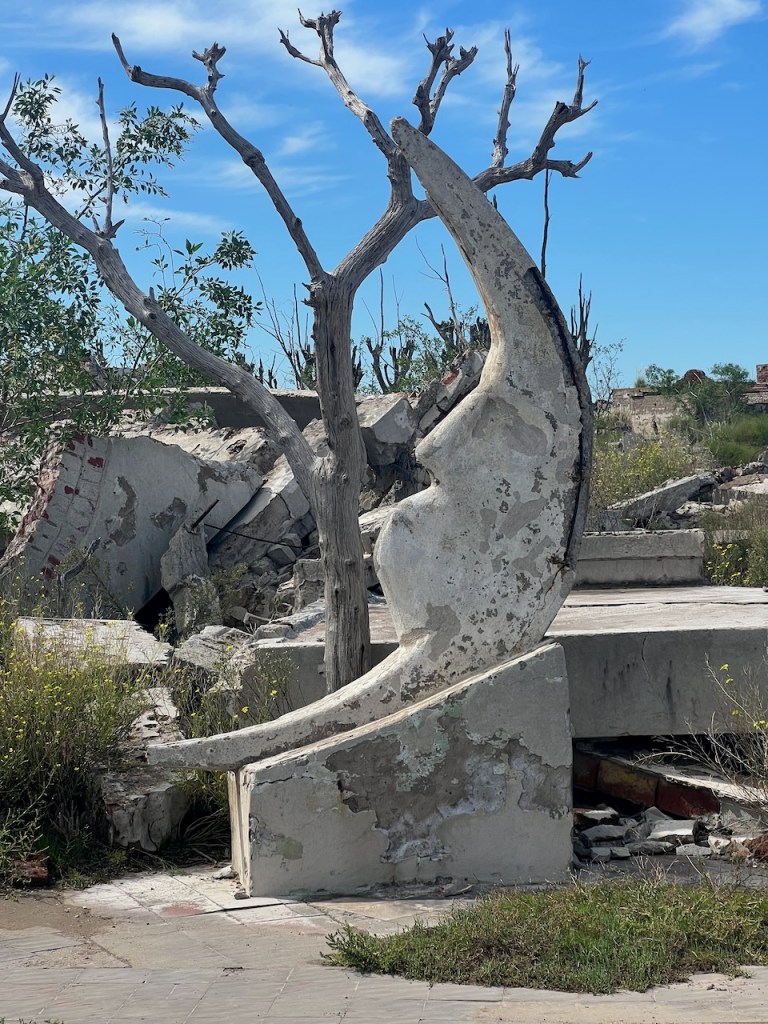


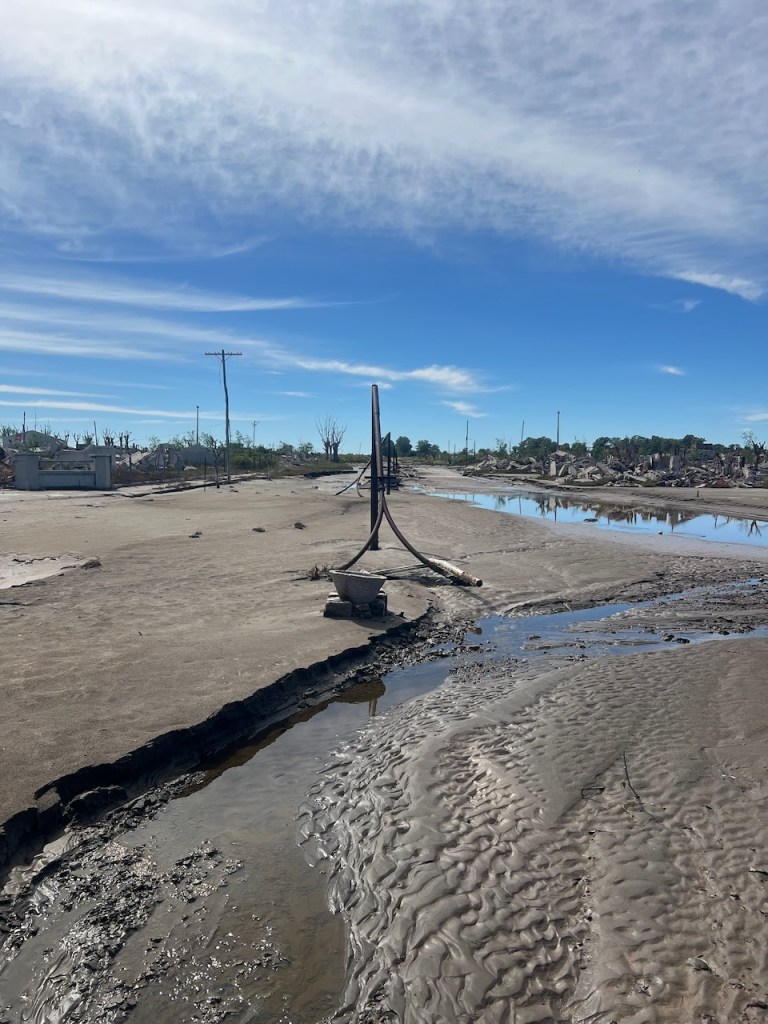
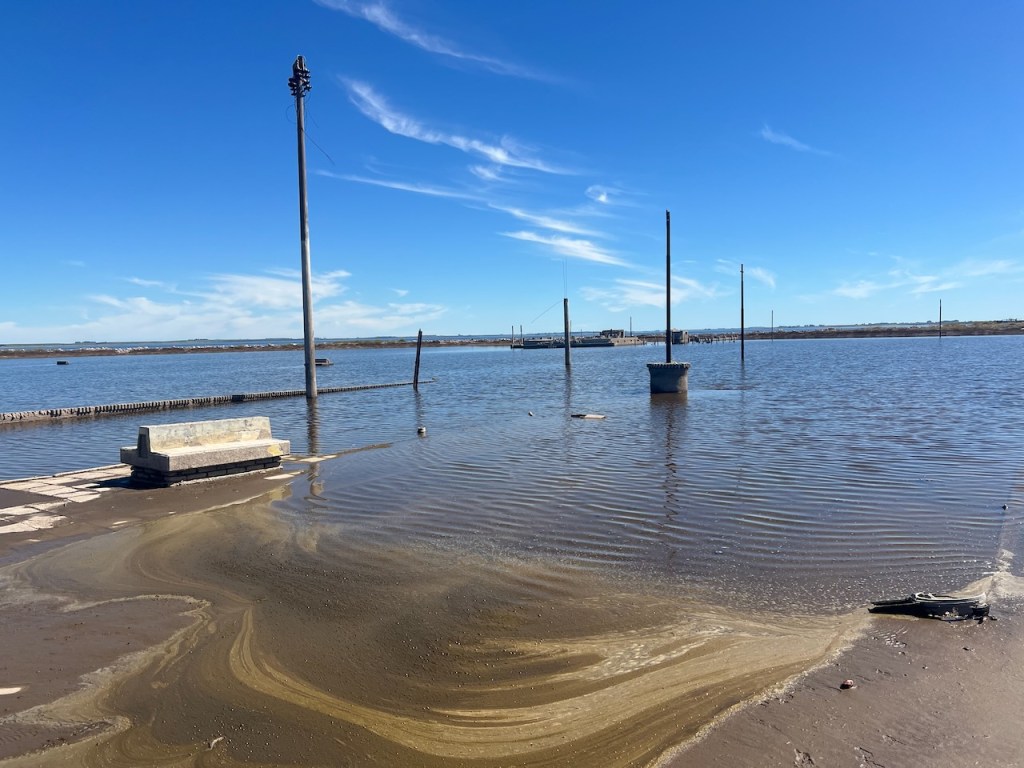


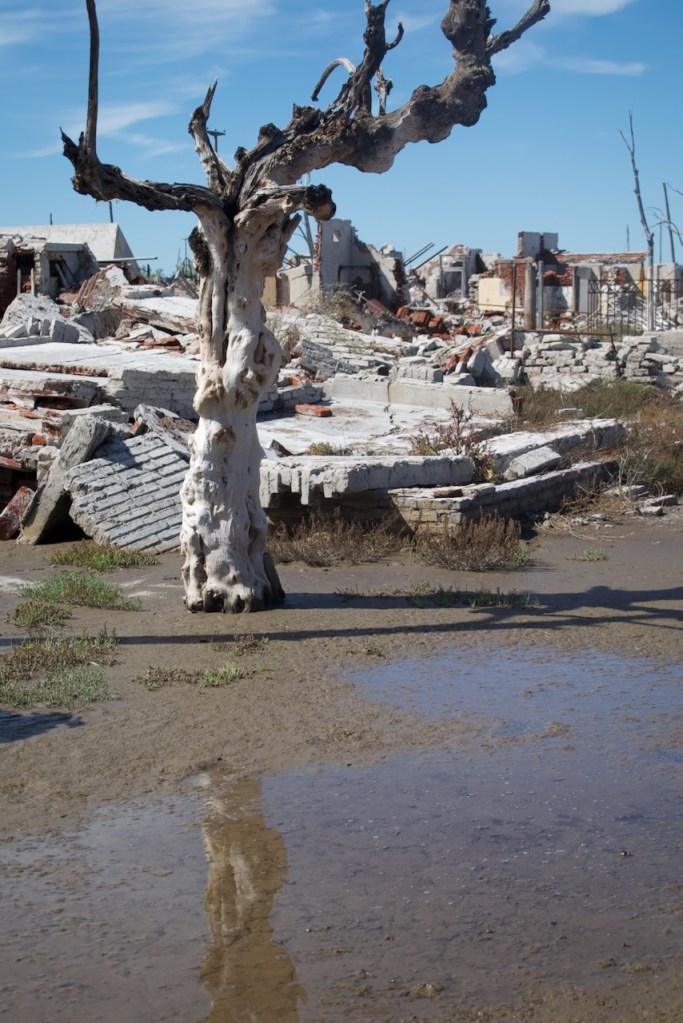
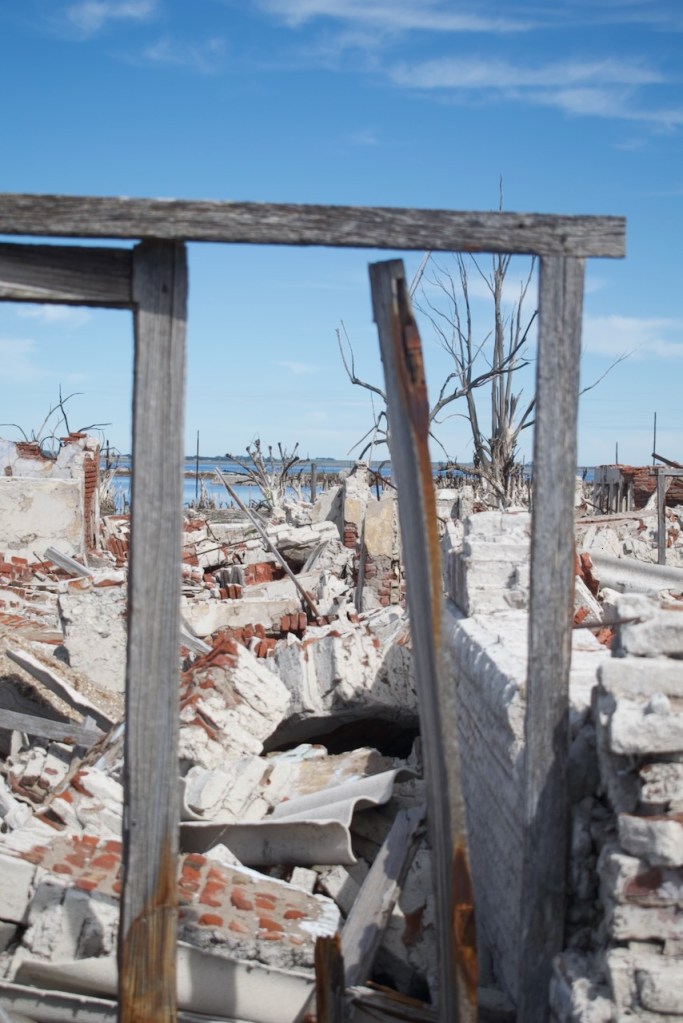
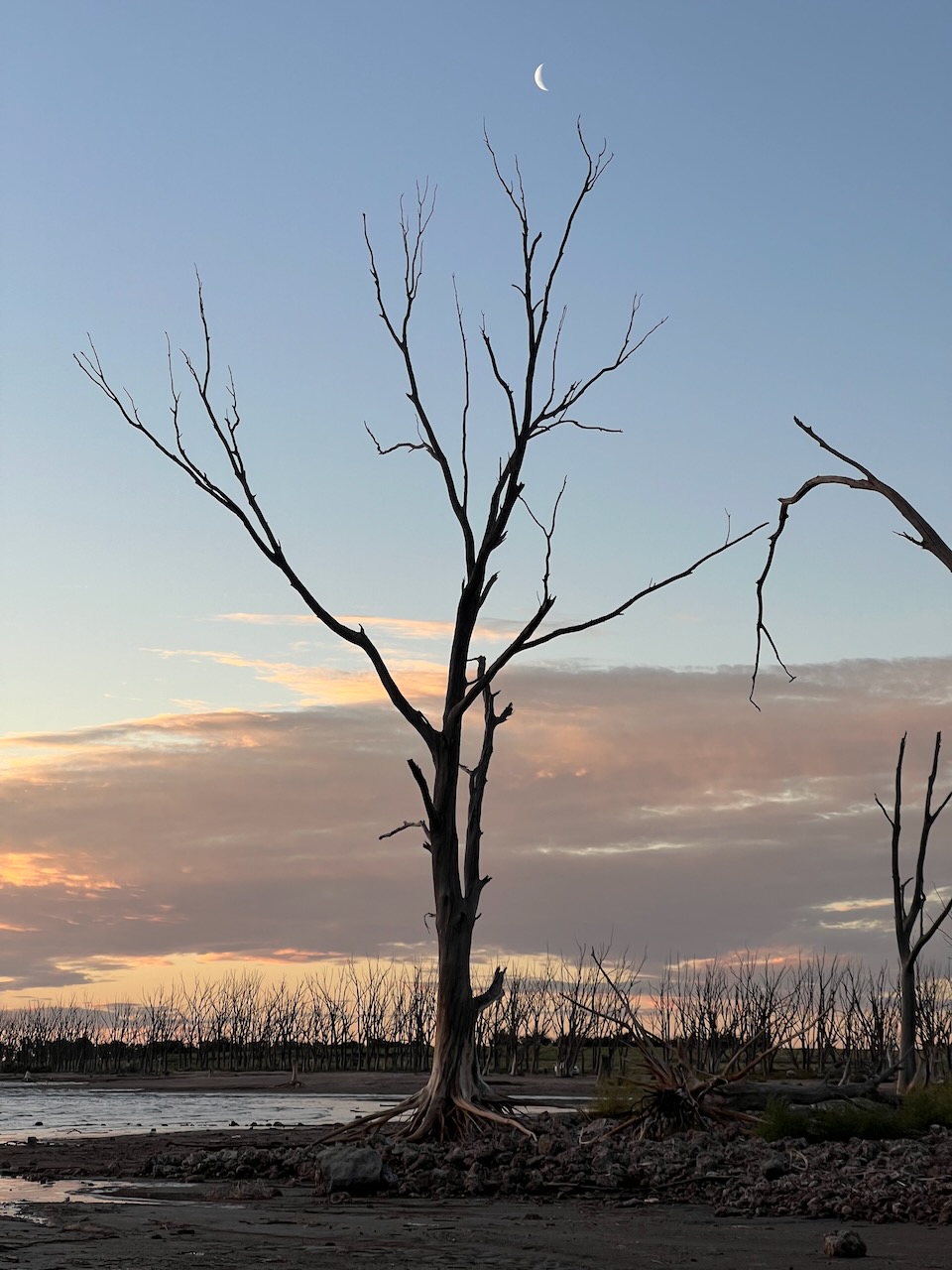
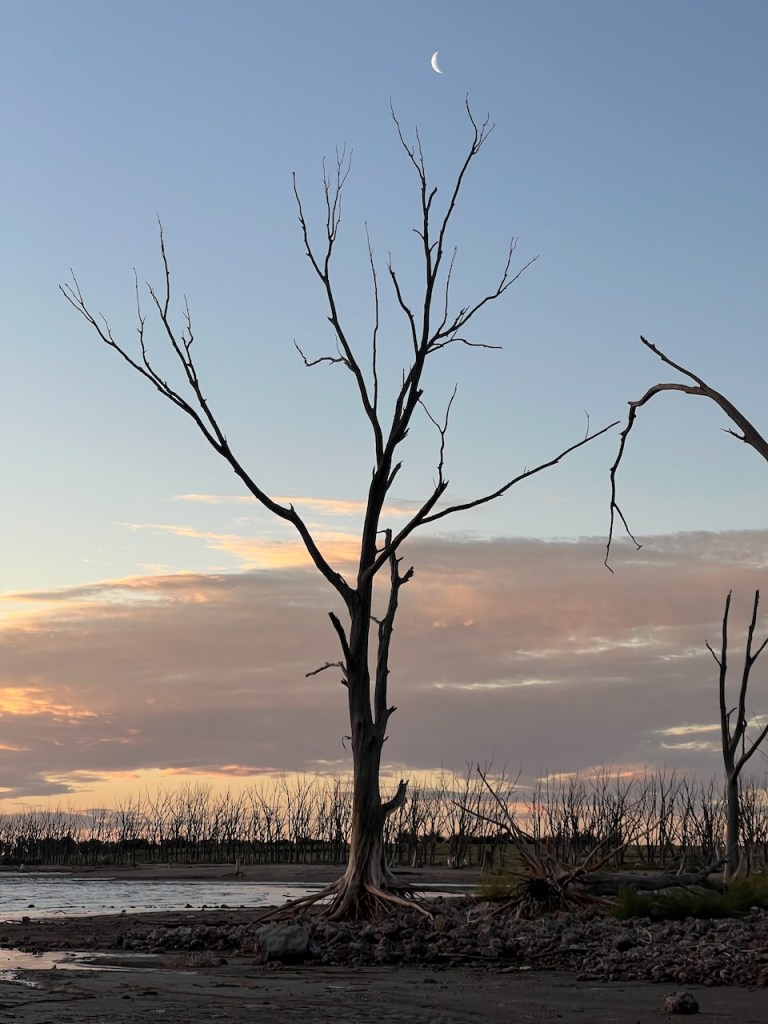
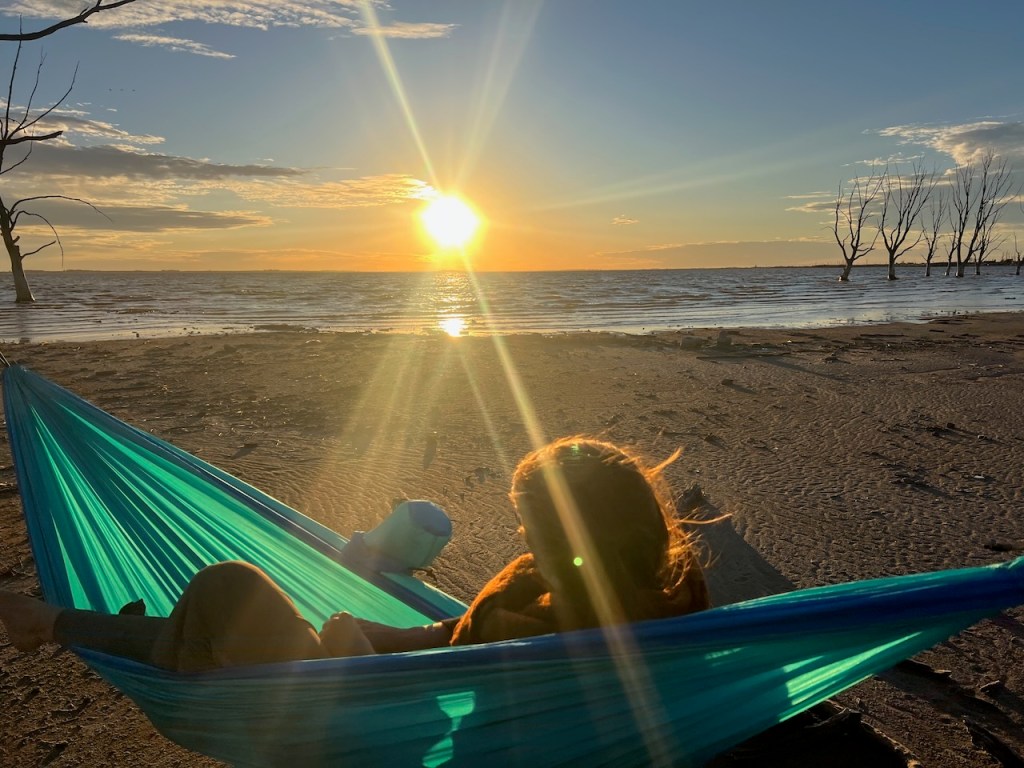
On the drive back one of the most spectacular sunsets to date tugs us to play out in the petrified forest, getting our toes wet in the salty water. The wind and the sun batter us, unprotected by the barebone trees; but the view is fantastic.

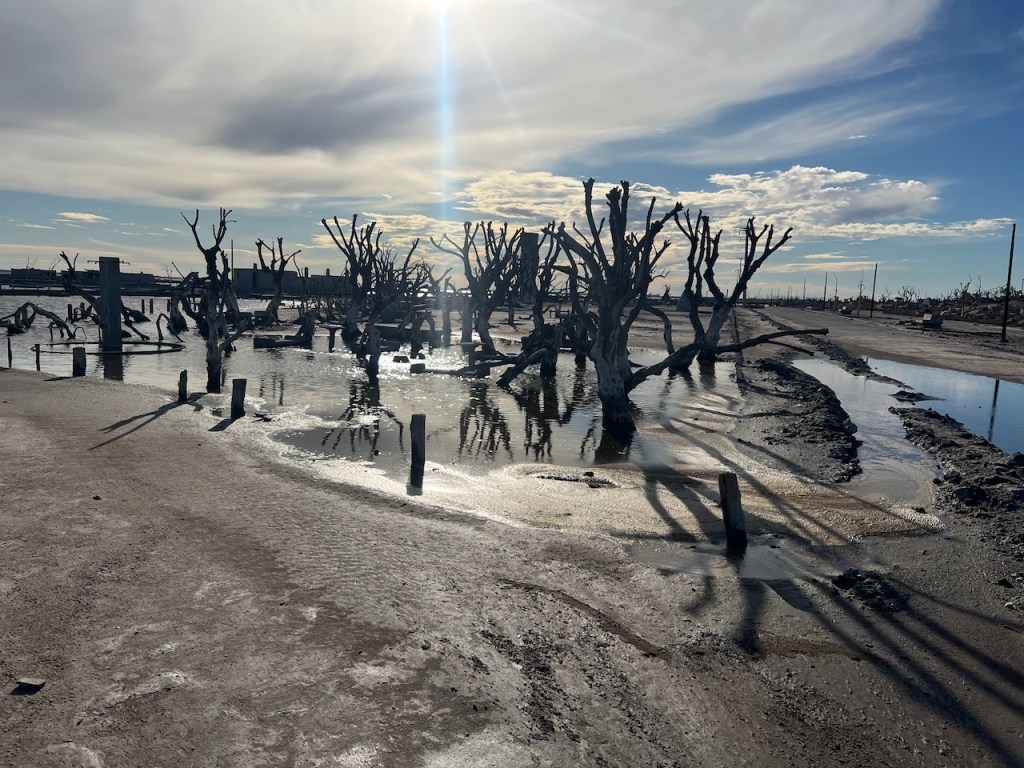
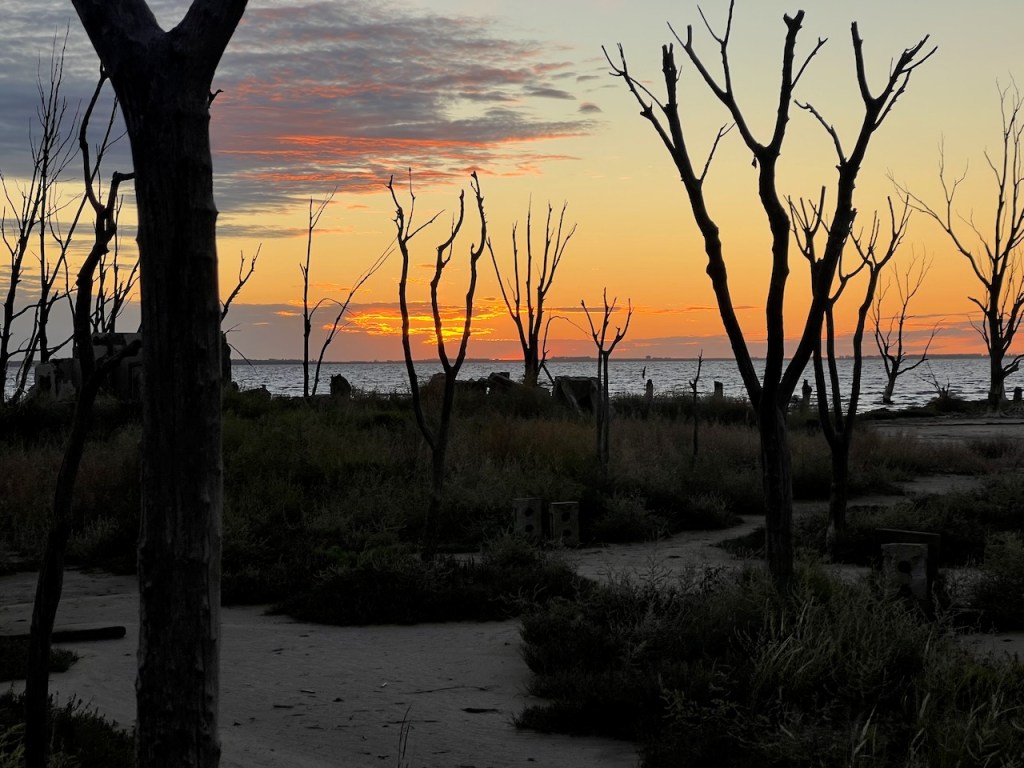
We come back that night to our camping ground, which luckily provides salt water baths that we arrive just in time to make use of. Any small cut we may have immediately burns, even before we step in the water; and I, still realing from the car debacle, am covered in them along my legs. I carefully make my way down the ramp and discover with surprise that we can both float without having more than our backs below the surface. In fact, we make the disconcerting realization that we cannot go into the water, repelled by it we are bounced back at every attempt. And despite our shivering, pertaining to the encroaching winter, the lost city inspired us many dreams that night, just like Atlantis it’s mythology seems it to fuel our imagination, colouring our dreamscapes with white trees and orange sunsets.


🇫🇷
Quand on pense aux cités perdues, c’est généralement l’Atlantide qui vient à l’esprit. L’histoire de l’orgueil démesuré des hommes qui a poussé Poséidon, furieux, à la condamner à sombrer sous les flots. Cette cité mystique semble avoir été punie pour son éclat par un dieu jaloux. Et bien que Platon n’ait (probablement) jamais visité l’Argentine, son récit semble avoir pris vie ici.
Nous sommes tombés sur cette histoire en quittant Buenos Aires, après avoir traversé Tandil. Nous sommes arrivés tard dans la ville avec l’intention de camper, mais là, des dieux en colère et un mauvais jugement nous ont donné notre première grande frayeur du voyage.
Nous sommes arrivés à Carhue, la ville voisine d’Epecuen, avec l’intention de camper. Le taux d’inflation élevé en Argentine nous a poussés à abandonner les hôtels au profit du camping. Les prix en constante évolution faisaient que nous ne savions jamais vraiment à quoi nous attendre. Même le camping était parfois inabordable : payer 20 € par personne pour planter une tente nous semblait exorbitant. Il ne restait donc que quelques heures de lumière du jour et nous avons décidé de chercher un autre terrain de camping. Avant de partir pour ce voyage, nous avions opté pour un 4×4. Cela nous semblait être une option plus sûre pour nous préparer à tout ce qui pourrait nous attendre. Mais la conduite tout-terrain est une compétence qui ne s’apprend pas facilement ni rapidement, et comme beaucoup d’autres compétences, elle s’acquiert aussi en échouant.
La destination ne semblait toutefois pas impossible à atteindre, nous tentions notre chance vers le camping municipal sur une route boueuse mais praticable. Les indices subtils et les signes d’une boue plus profonde ne nous étaient pas encore familiers à ce moment-là, et pendant un bon moment, nous avons passé les flaques et la boue sans encombre, tout en nous amusant. Mais cette sensation de fraîcheur n’a pas duré. Soudain, nous avons perdu notre traction et la boue nous a fermement aspirés. Je suis sorti de la voiture, les pieds enfoncés dans la boue, j’ai pris la pelle et j’ai essayé frénétiquement de donner à nos roues quelque chose à quoi s’accrocher pour nous sortir de là. Les pierres, les planches de bois et les briques n’ont rien fait pour nous aider à nous relever, et l’armée furieuse de moustiques a refusé de nous prêter main-forte.
Dans les situations de panique, tout comportement qui n’est appris qu’en théorie mais jamais mis en pratique semble s’envoler par la fenêtre. Plus tard, j’ai passé de nombreuses heures à repenser à tout ce que j’aurais pu faire différemment. Après une heure d’efforts vains qui m’ont coûté une chaussure et une semaine de piqûres de moustiques, nous avons finalement abandonné, la lumière du jour déclinant aussi vite que notre courage. Nous nous sommes installés dans la voiture, convaincus que nous allions passer la nuit dans la peur et l’inconfort, à moitié enfouis dans la boue environnante.
Nous avions toujours plaisanté en disant qu’un jour ou l’autre, nous devrions passer la nuit dans la voiture, ce qui nous réconfortait quelque peu dans notre situation difficile. Nous avons essayé de garder le moral en élaborant des plans pour obtenir de l’aide le lendemain matin. En désespoir de cause, nous avons même essayé d’appeler des garages locaux pour voir si nous pouvions organiser un remorquage pour le lendemain, mais en vain. La lumière s’estompait de plus en plus et une obscurité profonde s’est abattue sur nous ; les vitres noires ne laissaient entrevoir aucun espoir autour de nous. Je me sentais vaincu, à la fois par mon incapacité à nous sortir de cette situation et par le fait de nous y avoir mis en premier lieu. Mais si je peux tirer au moins une chose de ma formation médicale, c’est de ne pas abandonner tant que la partie n’est pas complètement jouée. Je ne pouvais pas laisser la peur, la honte et la culpabilité prendre le dessus ici et maintenant. Je me suis donc armé de courage, j’ai essayé de trouver la position la plus confortable possible pour dormir au volant et, après une bonne demi-heure passée à essayer d’écraser la trentaine de moustiques qui voulaient devenir nos compagnons de chambre, nous décidons de nous mettre au lit.
Suddenly – lights flashing up in the distance behind! Car lights seemed to be coming closer slowly and brought us new hope. My brain was jolted into action, we set off every light we could in the car, and I got out to wave our potential saviour over. In the deep mud, surrounded by a now familiar cloud of mosquitoes as thick as pudding, I waved my lights back and forth to try and bring attention to us. To our great relief it worked, and the pickup truck stopped just before of the lake Anteater was sitting in.
Nous n’étions en Argentine que depuis quelques semaines à ce moment-là, et je n’avais jamais parlé un mot d’espagnol auparavant. Je n’avais aucune connaissance de cette langue, si ce n’est celle acquise en regardant des telenovelas en espagnol avec ma grand-mère quand j’étais jeune, qui n’étaient pas encore traduites en brésilien. À Buenos Aires et à Tandil, je m’en sortais avec mon « latin », un mélange de français, d’italien et de portugais. Mais ici, à Carhue, j’étais complètement dépassé par la discussion avec le fermier qui s’était arrêté pour nous secourir. Nos gestes et notre traduction approximative suffisaient à lui faire comprendre notre désespoir. Nous avons inspecté la voiture ensemble, et après quelques minutes et il semblait incertain de pouvoir nous aider. Au bout d’un moment, il est parti en disant quelque chose que je n’ai pas compris, me laissant dans l’incertitude quant à la possibilité d’une aide supplémentaire.
Maintenant, vous connaissez déjà la fin de l’histoire, le fait que nous écrivions à ce sujet vous indique probablement que le voyage s’est poursuivi, mais pour nous, à ce moment-là, cela ressemblait à une fin très prématurée. Après avoir passé des mois à essayer de remettre notre voiture en état, nous l’avons vue sombrer quelques semaines plus tard. Les minutes semblaient interminables et, une demi-heure plus tard, un doute immense s’était rapidement installé. Malgré nos doutes grandissants, les phares d’un tracteur sont venus rompre l’obscurité de la nuit. La machine rouge crachotante, qui semblait sortir d’un autre siècle, est venue à notre secours. Notre sauveur ne nous avait pas abandonnés, mais était venu nous secourir avec les moyens dont il disposait, la célérité n’en faisant pas partie. Je saute dans la boue environnante, enthousiasmé par la possibilité d’un sauvetage, pour mettre la main à la pâte. Les longues cordes sont accrochées à la voiture, le moteur du vieux tracteur rugit et, dans un bruit de moteur, Anteater sort de sa place avec un bruit satisfaisant.
La voiture, encore à moitié recouverte de boue, crache et roule, son moteur est bien vivant. Lentement, nous commençons à la conduire, loin de l’obstacle. Notre sauveur nous propose de nous guider vers la sécurité à travers les autres pièges de boue sur le chemin du retour. Le trajet est intense, sous l’effet de l’adrénaline, j’examine chaque bruit que fait la voiture, me demandant si cet événement laissera des séquelles durables, nous ralentissant lentement. Nous revenons à la civilisation à travers le prisme familier des lampadaires qui répandent lentement leur lumière jaune sur notre pare-brise. La voiture qui nous précède s’arrête et, dans un mélange complexe d’espagnol argentin, nous indique où nous pouvons passer la nuit. Refusant toute forme de paiement, nous insistons pour lui offrir, à lui et à sa femme, le reste de nos fromages de Tandil, les meilleurs que nous ayons, même si cela nous semble trop peu pour le remercier et tout à fait insuffisant pour le dédommager de son sauvetage. Nous nous mettons en route vers notre refuge pour la nuit et, étonnamment, après une longue douche chaude, je m’endors rapidement, épuisé au-delà de l’anxiété.
Le matin arrive et mon cerveau se remet en marche. Je passe les deux premières heures à tester et à examiner tout ce que je peux dans le moteur pour m’assurer que tout fonctionne. Je ne trouve aucun défaut et, après un lavage minutieux, il ronronne comme jamais. Le test d’aujourd’hui consistera à rejoindre la ville engloutie d’Epecuen, l’endroit où nous étions venus initialement. Nous longeons le lac salé, le deuxième plus salé après la mer Morte selon les habitants, où nous apercevons des flamants roses et d’autres oiseaux picorant des crevettes d’eau salée. Nous atteignons bientôt les vestiges pétrifiés d’une forêt, dont les arbres, après avoir passé des décennies sous la mer salée, sont désormais blancs et nus sous le soleil. Le sentiment troublant de nature morte, d’existence suspendue, est encore renforcé lorsque nous atteignons la première étape de notre itinéraire.
Avant d’apercevoir la ville engloutie elle-même, vous trouverez sur la seule route qui y mène le « Matadero ». Un abattoir à l’architecture excessive. La carcasse Art déco domine le paysage environnant, la tour en béton qui abrite désormais des oiseaux migrateurs tranche de manière saisissante avec le paysage plat qui l’entoure. Le bâtiment lui-même m’inspire un sentiment de confusion, d’étonnement quant à la raison et à la manière dont une construction aussi grande était nécessaire. L’intérieur, bien que fermé, prête à une imagination macabre d’abattage industrialisé à une échelle qui semble trop grande pour la population qu’il dessert. Ce bâtiment est autant une déclaration qu’une fonction, témoignant de la place centrale du bétail dans la vie argentine. Aujourd’hui, désaffecté et partiellement détruit par le temps, il endosse un nouveau rôle, obscurci derrière les photos Instagram.
Nous continuons notre route autour du lac et arrivons à la ville d’Epecuen. Après avoir payé le prix d’entrée, quelques milliers de pesos chacun, nous nous enfonçons dans la ville proprement dite, en commençant par l’avenue principale. Epecuen était un havre de paix pour la noblesse argentine qui cherchait à échapper à l’agitation de Buenos Aires. Une ligne de train aujourd’hui désaffectée amenait ce que le pays pouvait appeler la royauté pour se baigner dans l’eau salée du lac voisin et profiter de restaurants raffinés et d’hôtels de luxe. En parcourant l’avenue principale, nous voyons les vestiges de cette vie passée, dans les ruines délabrées des hôtels et des restaurants, dont seules la structure et les carreaux délicats témoignent encore de cette vie passée. Comme pour l’Atlantide, tout s’est passé si vite que ceux qui partaient n’ont pas eu le temps de faire leurs valises. La rupture d’un barrage a provoqué une montée spectaculaire du niveau de l’eau, engloutissant toute la ville sous des eaux saumâtres. Heureusement, les habitants ont eu le temps d’évacuer, mais leurs biens ont été ensevelis pendant deux décennies. La décomposition s’est faite lentement sous l’eau, et à mesure que le métal se corrodait, la coquille de la ville blanchissait et se lavait de toute activité humaine.


En se promenant dans la ville, on ne peut s’empêcher de remarquer l’ironie poétique d’une ville construite pour maîtriser et détourner les eaux du fleuve au profit de sa riche clientèle, qui allait finalement tout emporter et la submerger. Nous arrivons près des piscines elles-mêmes, un vaste complexe d’espaces géométriques qui s’enfonce désormais dans le sol. Sa taille évoque une activité intense, une image d’étés chauds et d’enfants courant partout pendant que leurs parents sirotent le dernier cocktail à la mode. L’esthétique des années 50 est une influence invisible ici. Dépouillé de ses chaises en plastique emblématiques et de ses robes à pois, le squelette conserve néanmoins une certaine nostalgie. Comme si l’endroit lui-même s’attendait encore à voir les foules revenir en masse.

Nous parcourons les rues blanches, les routes innondées nous obligent à modifier notre itinéraire à plusieurs reprises, parfois même à escalader les ruines pour les traverser. Souvent, nous nous retrouvons entourés d’eau là où se trouvait auparavant une avenue paisible, bordée d’arbres. L’immobilité de la ville lui confère une certaine photogénie. Nous n’avons jamais vu une ville aussi immobile, aussi parfaite à photographier qu’ici. Nous finissons la visite en longeant la digue qui n’a pas réussi à protéger la ville ; de là, nous avons une perspective unique sur le lac qui s’étend derrière nous, semblant prêt à reprendre possession de la ville.
Sur le chemin du retour, l’un des couchers de soleil les plus spectaculaires que nous ayons jamais vus nous incite à jouer dans la forêt pétrifiée, les pieds dans l’eau salée. Le vent et le soleil nous fouettent, sans que les arbres dénudés ne nous protègent, mais la vue est fantastique.
Nous retournons cette nuit-là à notre camping, qui propose heureusement des bains d’eau salée dont nous arrivons juste à temps pour profiter. La moindre petite coupure que nous pourrions avoir nous brûle immédiatement, avant même que nous entrions dans l’eau ; et moi, encore sous le coup du déboire avec la voiture, j’en ai plein les jambes. Je descends prudemment la rampe et découvre avec surprise que nous pouvons tous les deux flotter sans avoir plus que le dos sous l’eau. En fait, nous réalisons avec consternation que nous ne pouvons pas entrer dans l’eau, repoussés par celle-ci à chaque tentative. Et malgré nos frissons, liés à l’hiver qui approche, la cité perdue nous a inspiré de nombreux rêves cette nuit-là. Tout comme l’Atlantide, sa mythologie semble alimenter notre imagination, colorant nos rêves d’arbres blancs et de couchers de soleil orange.
 Die Große Plan
Leave a comment