This is the first part of a three part series, you can find part two and part three here
🇺🇸
Talking with our hosts in Sao Paulo, Roberto mentions a hike near Paraty called the “Traversia da Juatinga”. Keen to get some outdoors time and drawn also by the fact that this hike crosses from the town of Paraty all the way to Trindade (two towns that we were eager to explore again after our visit in 2023), we set out to undertake this hike. Paraty being situated in between Rio and Sao Paulo we initially imagined undertaking it as a step on the path back from Rio to Sao Paulo. We had left Sao Paulo to visit my family in Rio and had to come back there later to take possession of our car before setting out on a bigger adventure.
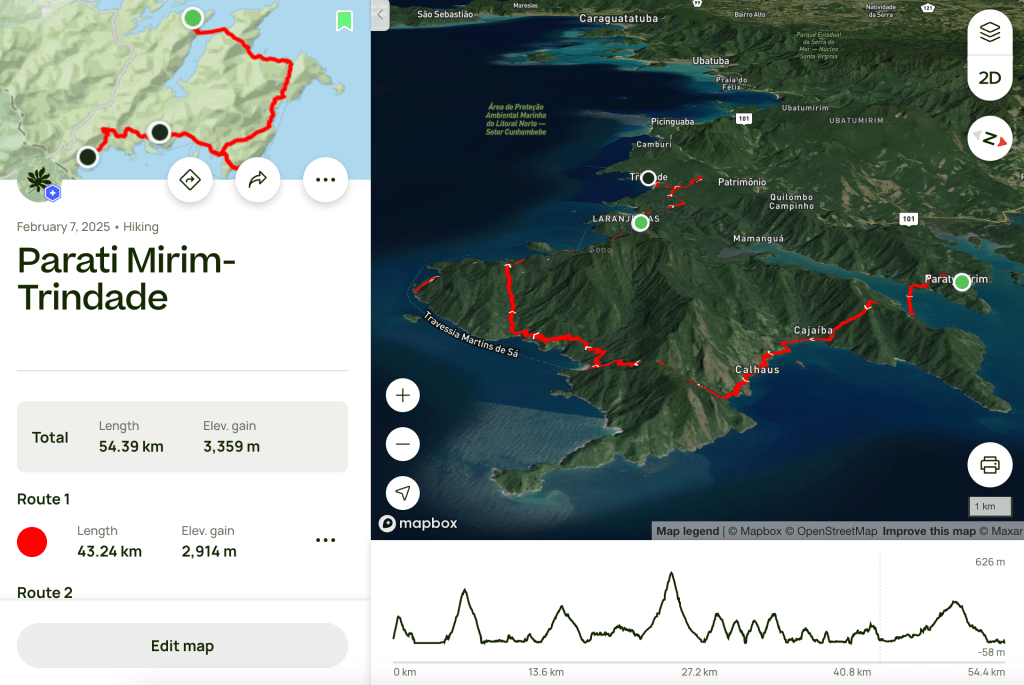
The Traversia de Juatinga is a long 5-day hike through the Atlantic rainforest. To prepare for it I even started a daily routine of hitting the gym for 1h30 in Rio, following a justified comment by Leonie on my physical condition. We ransack the Decathlon in Leblon for hiking pants, sun protection and water bottles to carry us through. We pack only little food, as along the hike there are plenty of Caichaçara communities providing food, and we don’t pack a tent or sleeping bag either, instead we pre-book our accommodations along the hike. All that’s left is to find transportation, which in the absence of our car, ends up being the bus.

On the day before we pack our backpacks to try and bring as little as possible. The yoga mat and a portable speaker make it on the list of essentials. Conscious of our need for water under the sweltering Brazilian summer we pack about 1,5L per person per day, about twice what is usually recommended for this hike, and water purifying tablets to push us further. Another place where we fail to save weight is the mosquito repellent, and every gram we take of it will serve us well in the end. We leave our laptops and take only a small notebook with us to record the time. And about four and a half hours of time later into the bus ride we start seeing the familiar white streets of Paraty announcing the beginning of our journey.

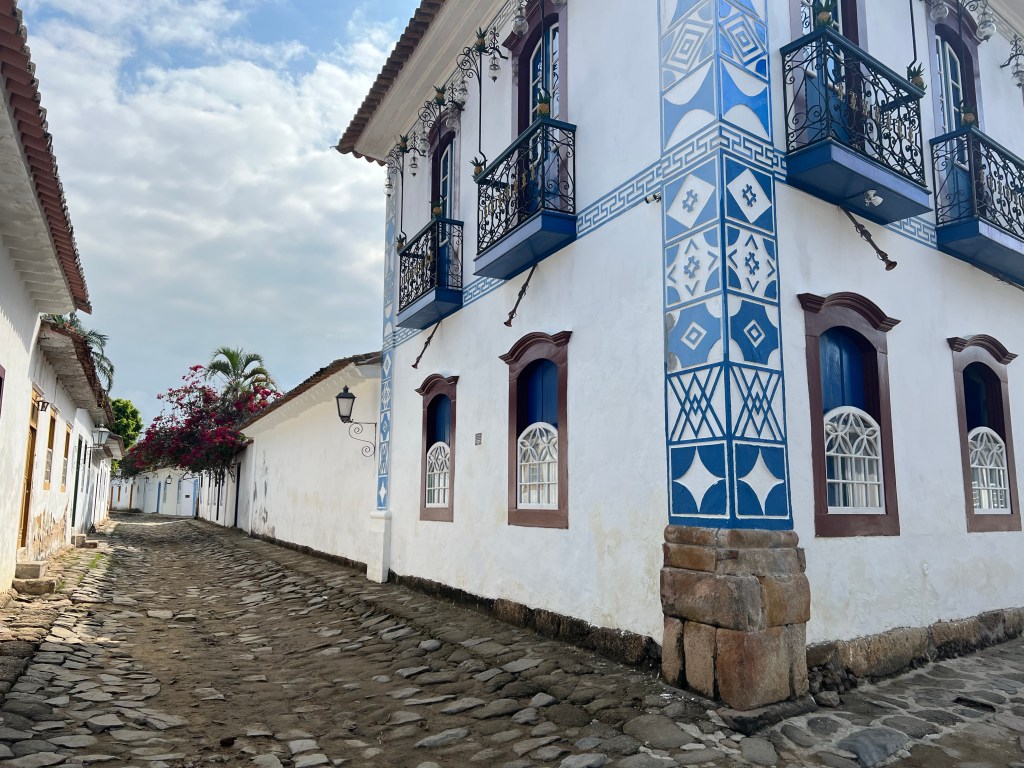
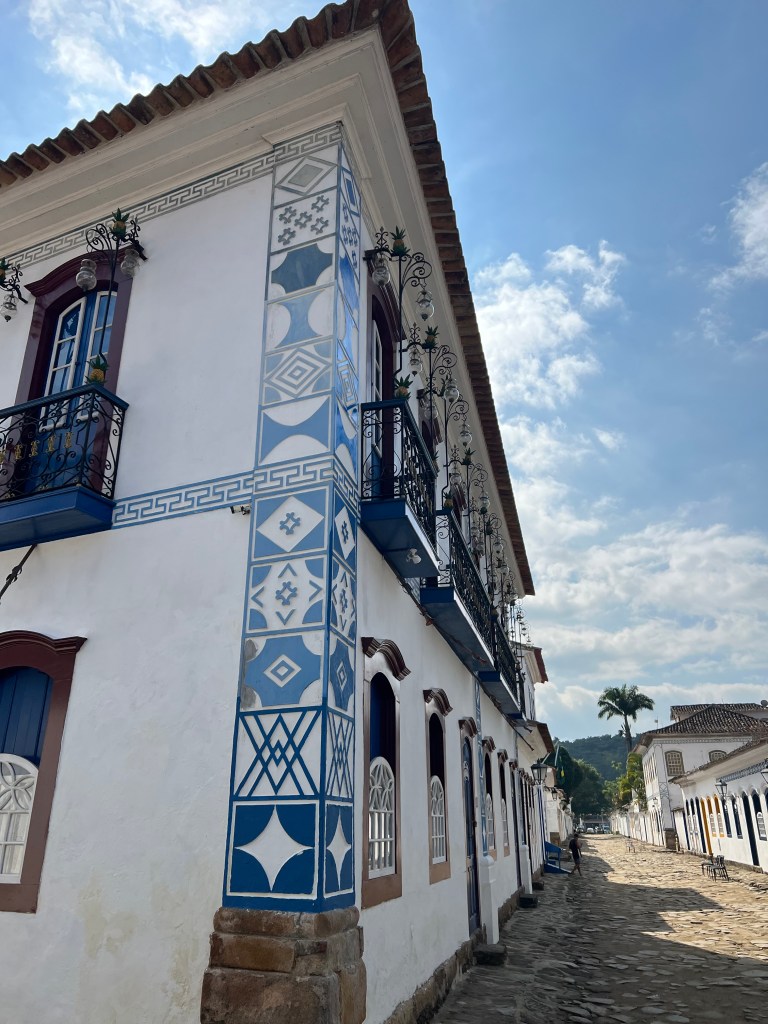
The City of Paraty is a remnant of Portuguese colonialism that decided to stick to its history. The white and blue building and the rough paved alleys instantly transport their visitors into a forlorn history of gold mining and merchant ships entering the bay. Today it is the starting point to many boating excursions into the infinitely complex coastline surrounding it. Interspaced between rocks and forest, it seems people have decided to settle their houses in the most unlikely of nooks and craneys. Oftentimes disconnected from fresh water, electricity or internet they stand as little windows of paradise reachable only by the sea.

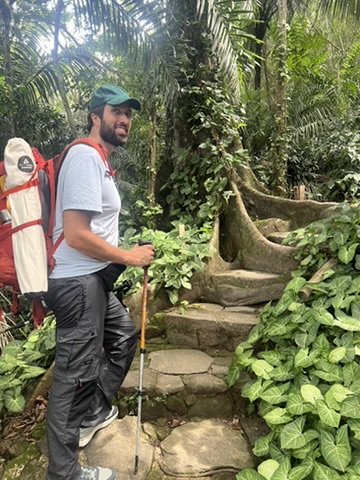
The next day after a quick visit into town that scores me a cap and a sizeable meal at a “Comida ao quilo” (a very typical kind of restaurant in Brazil, where you pay for buffet-food by the kg), we set off for our first stop, Paraty-Mirim. Paraty-Mirim is an even smaller community, sitting at the estuary of two rivers that mix with the sea water. Getting there by bus proves difficult due to the randomness of the bus schedule, so we settle for a taxi ride instead. Riding into the dusty road, bouncing through different pot-holes we make our way to a small path. The taxi driver tells us that he will go no further but that our hostel is a small hike away up the forest. We strap on our gear for our first unexpected hike and get our first taste of the relentlessness of the mosquito population on our way up to the hostel. Already, we start to appreciate how useful our walking sticks will be. In Europe I used to have almost a polite disdain for their use on hikes; here, with the uneven terrain, the slippery mud and the uncertain path ahead, they prove invaluable.
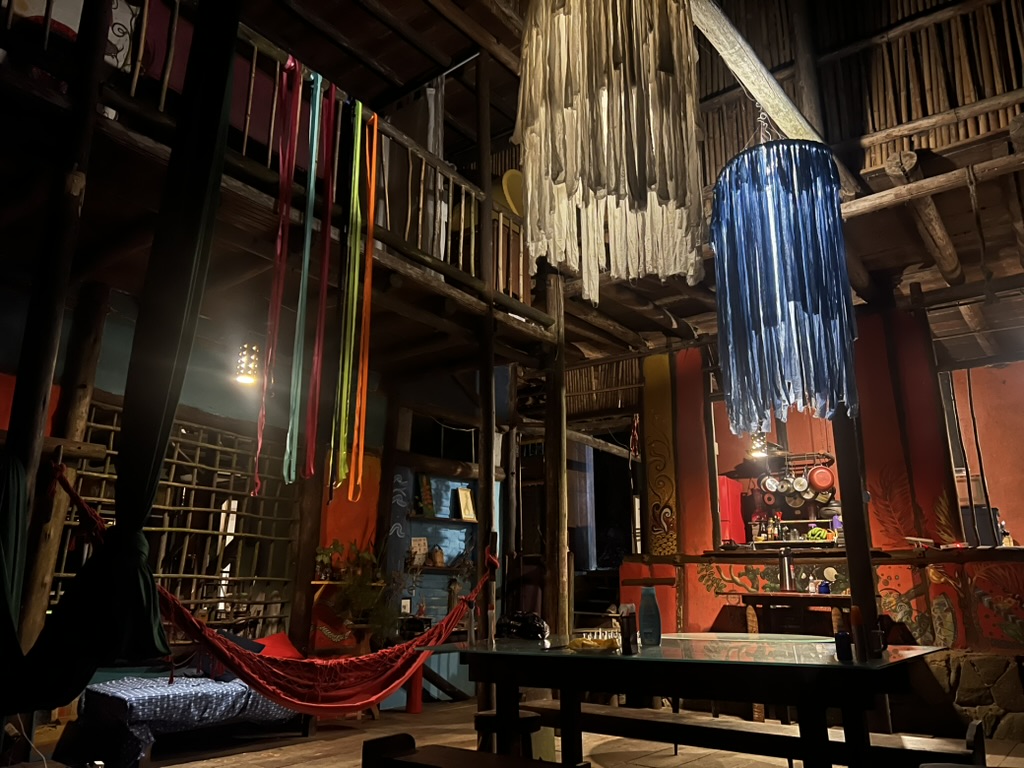
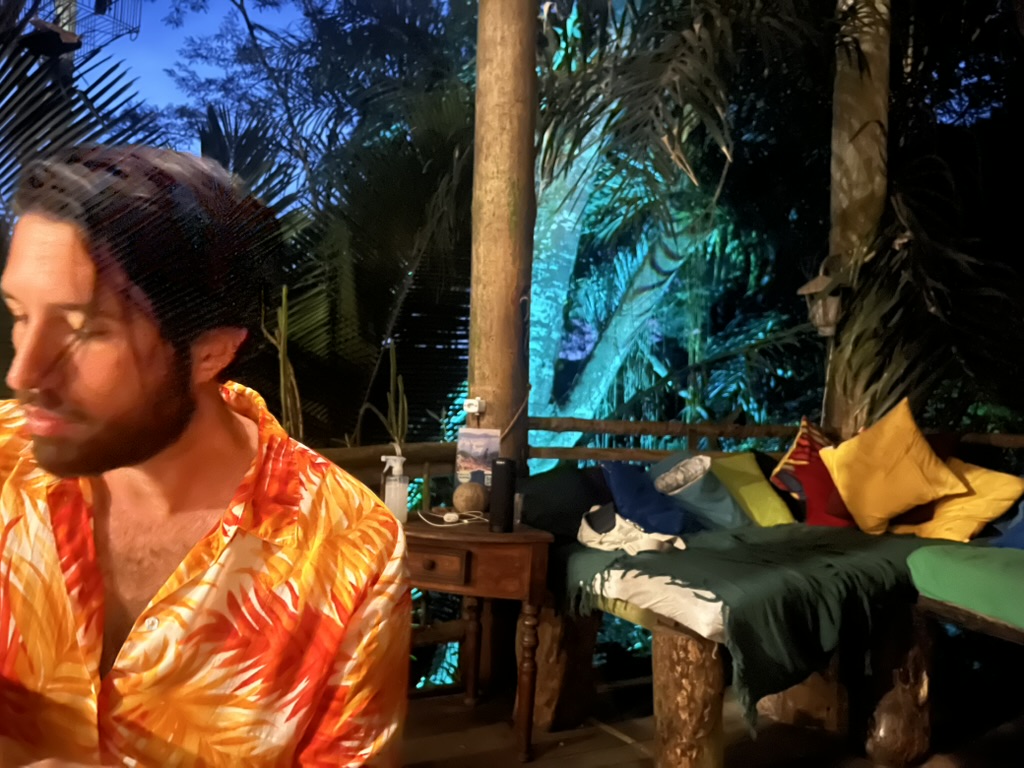
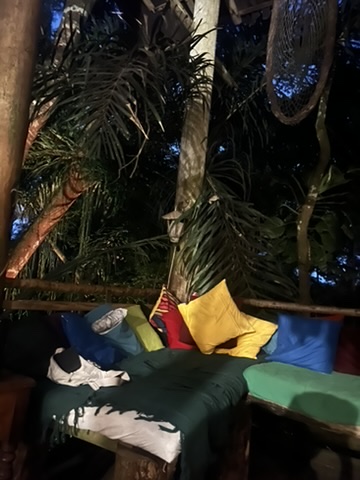
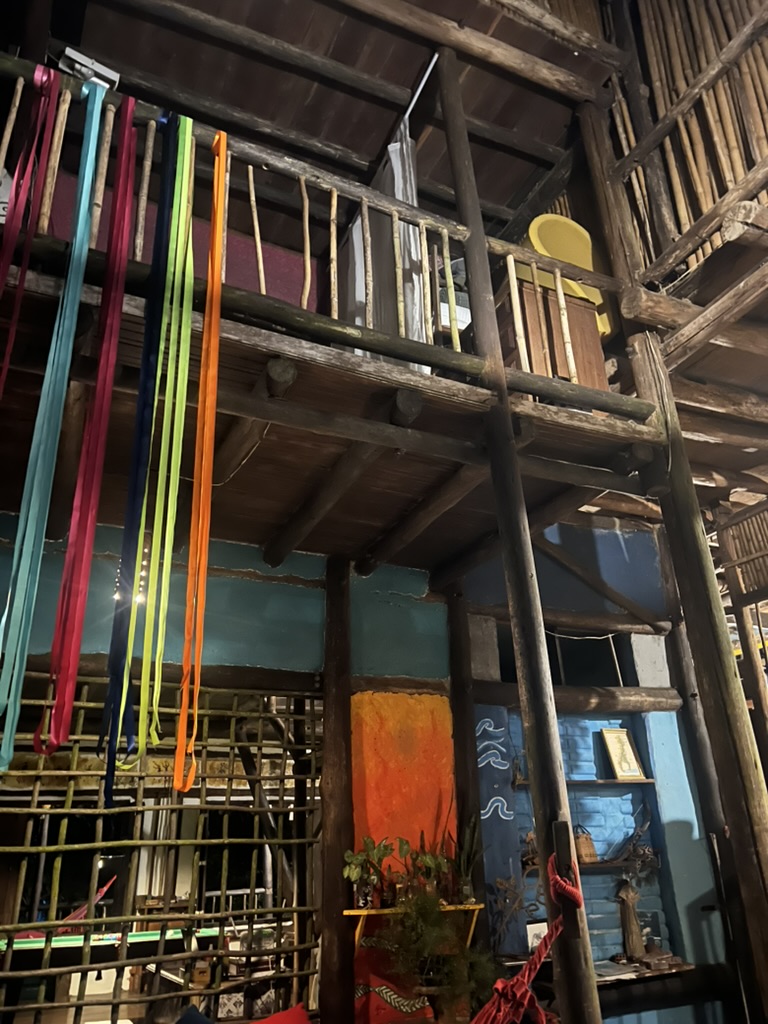
We arrive at our hostel and discover an incredible construction, one that would seem at home in a Robinson Crusoe novel. Beams of wood separate disconnected floors, making for a complex geometry. We are shown our room, a small hut that sits atop the main entrance, with only a curtain of bamboos as our means of privacy. The inhabitants of the hostel themselves could be out of a Jacques Kerouac novel, and the lush decoration of this hidden jungle palace speaks to that spirit. We won’t stay enough to come to really dive into this place as the next day looms early for us.
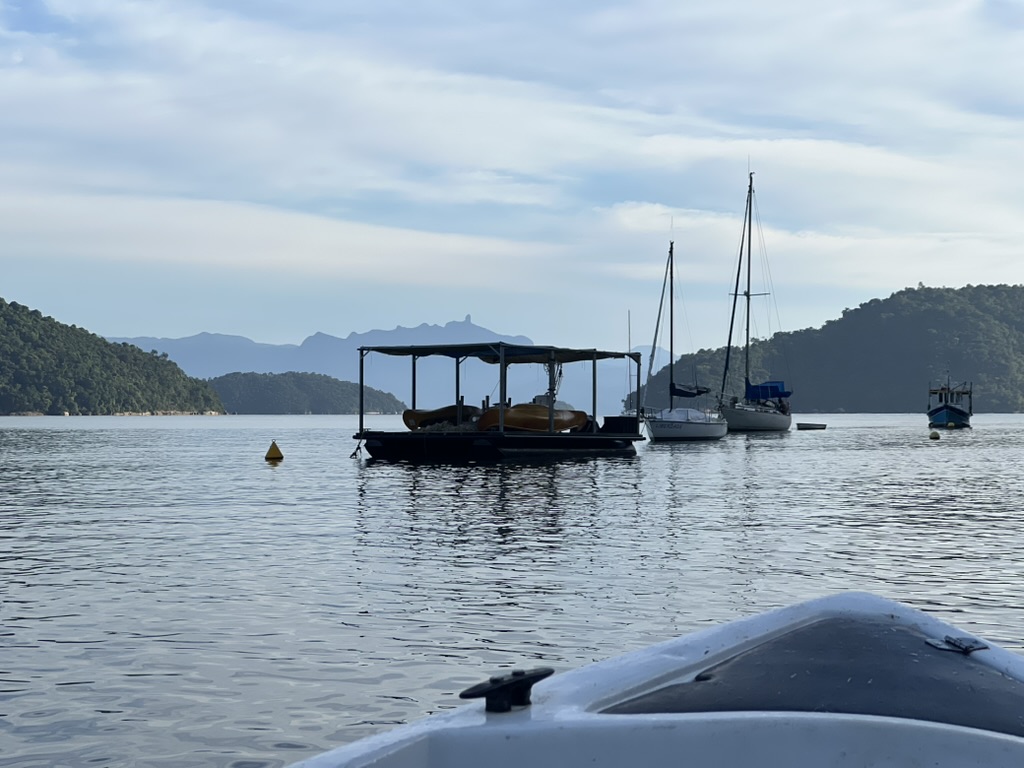
At six a.m. the alarm rings to prepare us for our departure, and to the dazed look of the inhabitants of the hostel, coming back at this very same hour, we make our way, hiking sticks, long socks and hiking backpack in tow. We have arranged a boat transportation for the first part of the hike, to cross the “Fjord” of Juatinga. As we reach the end of the dirt road and onto the jetty we realise that without any cell service and having never met our ferryman we may not be in the best situation to make our journey. Thankfully, after interrogating a few fisherman as to the identity of our mysterious ferryman, we hop on the flat-bottom boat that will take us across. The ride isn’t long, but it saves us many hours by setting us at the foothill of crossing. We set foot on the empty beach of Praia dos Engenho and, with a general pointing of the finger from our guide as to where to start the hike, prepare our ascent.


The first hundred meters give us a lenient first taste of what is to come. Granite steps help elevate us slowly into the luxuriant forest. The sounds of boats gradually gets replaced by the ever changing melodies of exotic birds in the canopy. Having lost a good amount of blood to mosquito bites in the first half hour we decide to embrace the dorky zipper-pants and go ankle-long. The hike quickly loses it’s composure and leaves us to explore a narrow mud trail rather than a well defined path. Soon enough that path itself disappears, we enter an area of huge granite rocks spewing water in between.
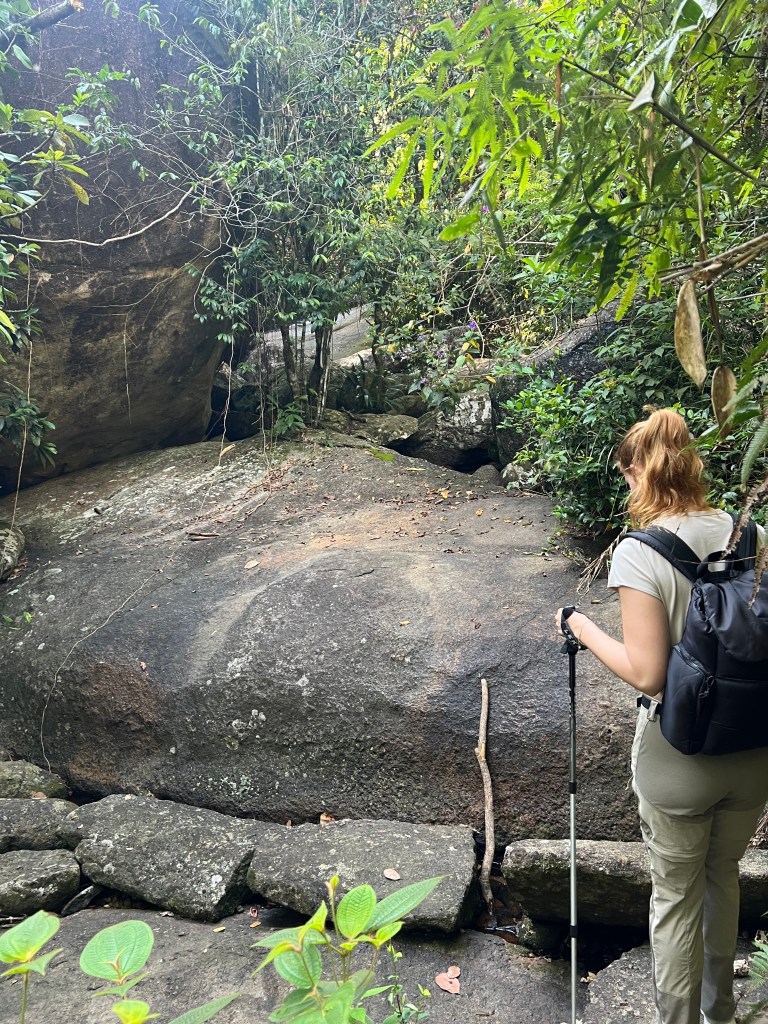

Hopping and jumping around them, and with the help of a tracking app, we find our way again. Through a muddy waterway, we challenge our climbing capacities and our footing as the mud slips under our shoes. The heat starts to challenge our endurance, but even moreso the humidity, easily reaching upwards of 85%. It clings to our clothes and our skin and prevents us from losing our excess heat. We sit down to wring out our sweat-drenched clothes and to let our heart-rates fall back down. As we look out we see the first fruits of our efforts; the landscapes before us, rife with exotic trees, multicolored flowers striking against the deep blue of the bay. The tracking app though is an unfortunate realist and informs us that even after 2 hours of this humid jungle, we haven’t even made half the climb yet.
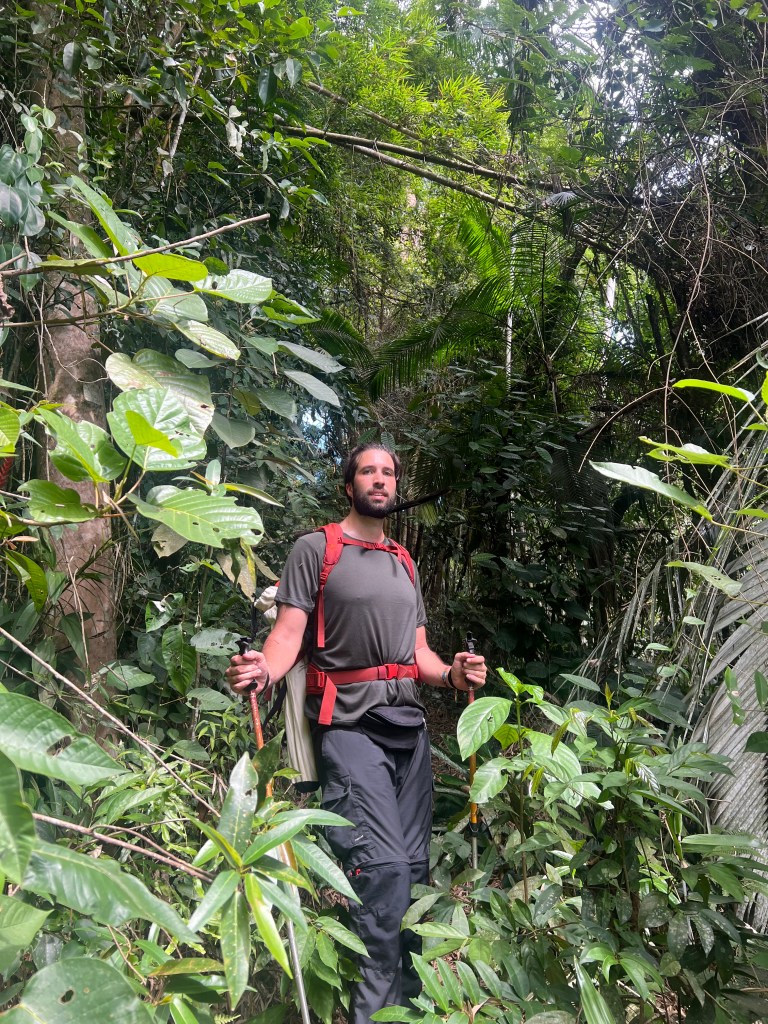
We continue the climb. We leave the muddy water-paths and enter a forest of tall trees and brooks. The climb does not let up, but the changing environment creates a dazzling complex of large leaves, of hanging vines and of animals discussing their interest in us in their many wonderful languages. The forest is just as steep as before. The nooks and crannies that the root system forms create an intricate pattern of steps and ladders leading up and up. Always reaching further the plants fight for light and water, grabbing every inch that they can. The ascent gives us space to discover the smaller forms of life here; the ants crawling up the trunks, the spiders creating intricate webs and the cicadas, blasting their concerto across the trees. We can’t stop much though, least we be overtaken by waves of mosquitoes constantly on our tail.
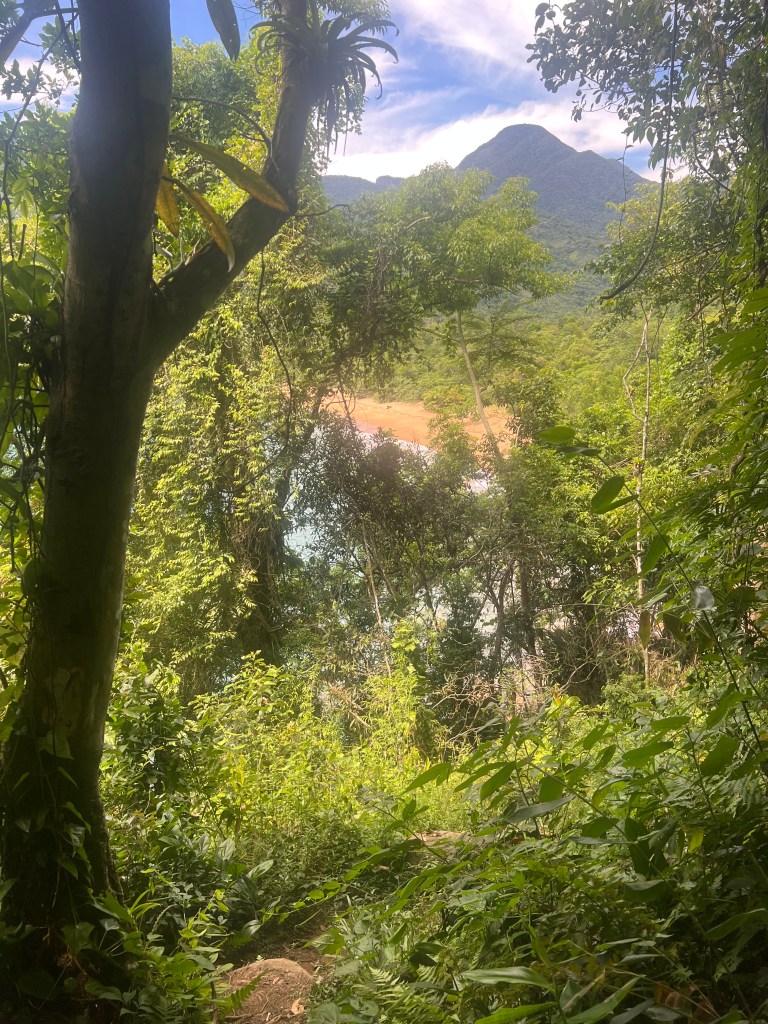
Through all that the horizon still finds a way to make itself seen, slowly and then abruptly we arrive at a sight of our goal. The resplendent blue sea in front of us an invitation to swim in it’s midst. Still in front of us lies half the challenge, the descent. It begins as the ascent ended, abruptly. We slip and skid across mud on our way down. Carrying the backpack the descent makes itself furthermore difficult on me, as on top of my weight my knees are holding all of our provisions for the next five days. The effort is different, instead of cardio now my fight lies in maintaining balance, on tensing enough to ensure stable footing and releasing enough to keep us moving. And through the spider webs and the ant hills and the bamboo groves and the brooks and the rocks we finally arrive on the other side.
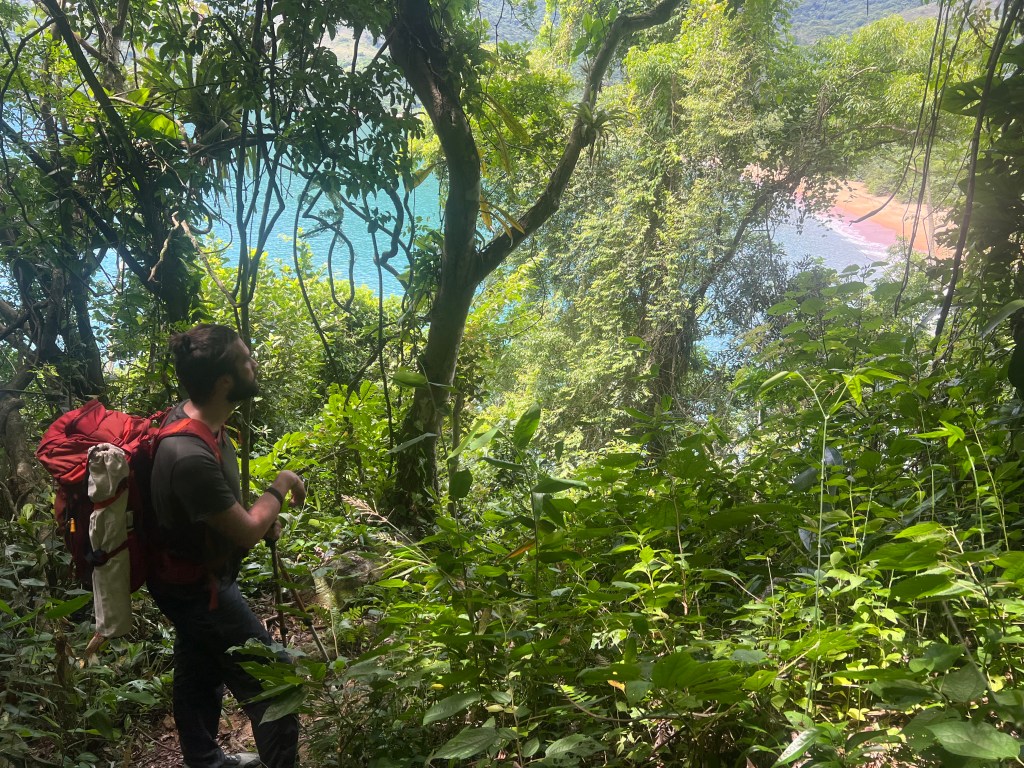
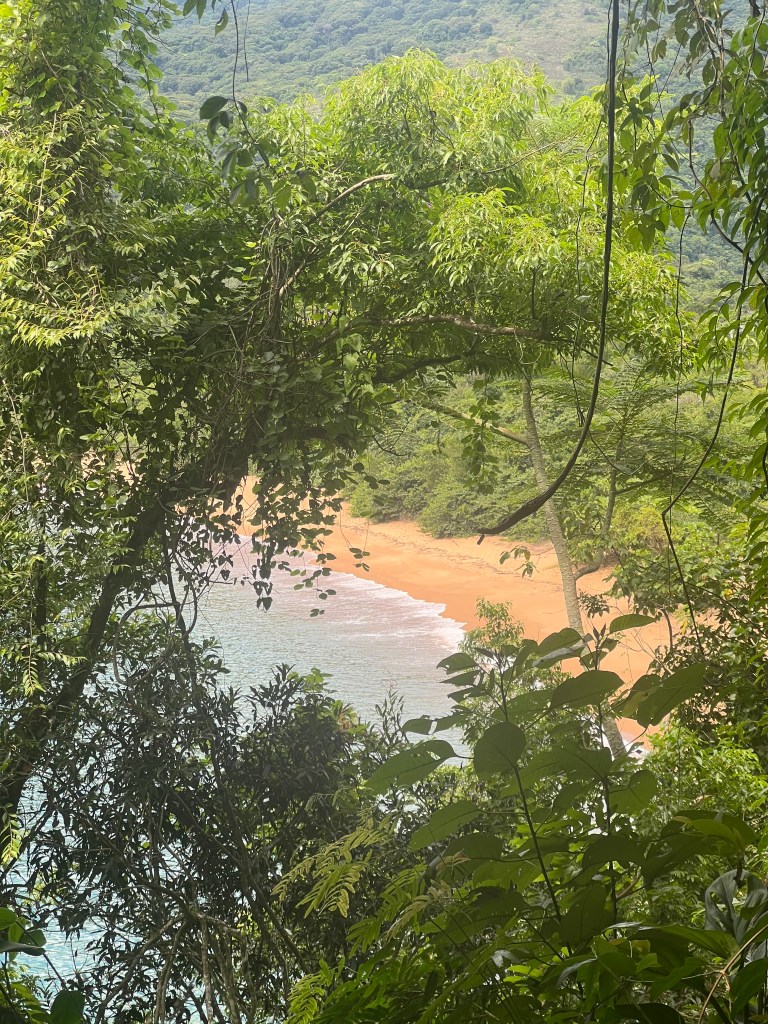
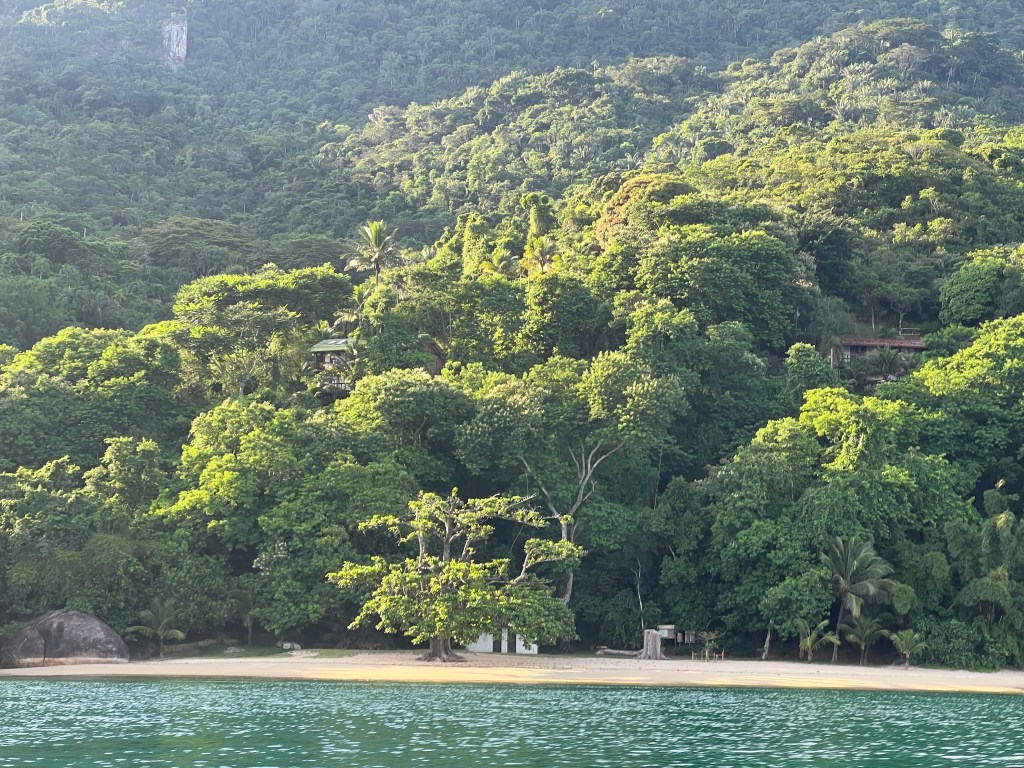
Praia Grande is wide and empty and evokes peace, seeing it makes us sigh in relief. We are a sweaty mess and have only one thing on our minds: getting into that water. Our backpacks fly off our back as quickly as our clothes, and we take a plunge in it’s crystalline waters. One tree ventured out far onto the beach and seem happy to share with us it’s protection and shade. We allow ourselves to come back to an internal temperature more in line with living than just surviving. As my heart stops racing I feel it’s heavy beats in my ears, as they plunge underwater I focus on that sound alone and let myself melt away for a while.
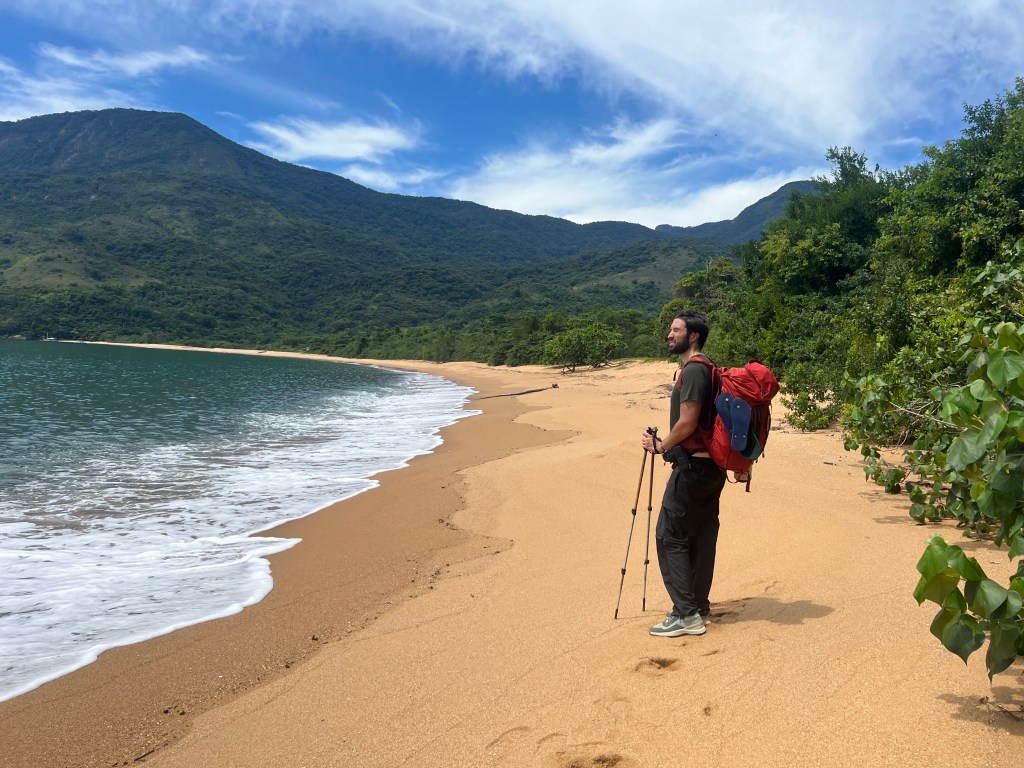
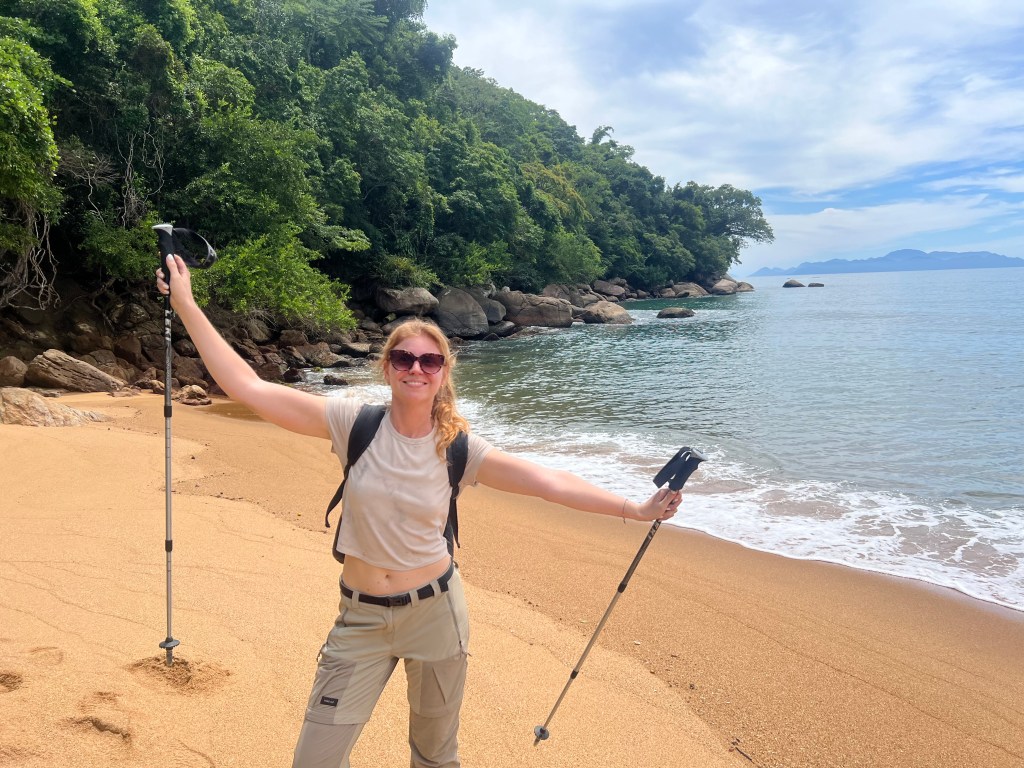
The scorching sun offers us no other shelter than the lonesome tree, and our itinerary pushes us to move on after a few hours. Our arrangement for the night still lays a ways away; by the end of the day I had arranged for us to be transported to our accommodation Praia de Sumaca by boat, but we have to make it to the pickup point before 16h00, as the tides will not allows us further delays. I assumed the leftover 4 km along the coast, this time without any forested hills, would be an easier undertaking.

We therefore make our way out of Praia Grande and find ourselves back in civilisation. The sight is welcome, as in the past few hours our water supply had evaporated from our back. We sit down and order a couple of “pastels” (in a nutshell: an oily, fried piece of dough, much beloved in Brazil), a quick and easy way to fill up on the necessary energy. We sit to watch the waves come back as they fry in the back.
Upon this inviting sight a friendly man, Cristoph, approaches us. He can’t much hide his German nationality, his openness and willingness to share his resources a tell-tale that can’t be easily mistaken. He offers to accompany us on the rest of our journey, since he is going to Pouso da Cajaiba, our pickup point, as well. He knows the way. He assures us that we can still make it until 16h.
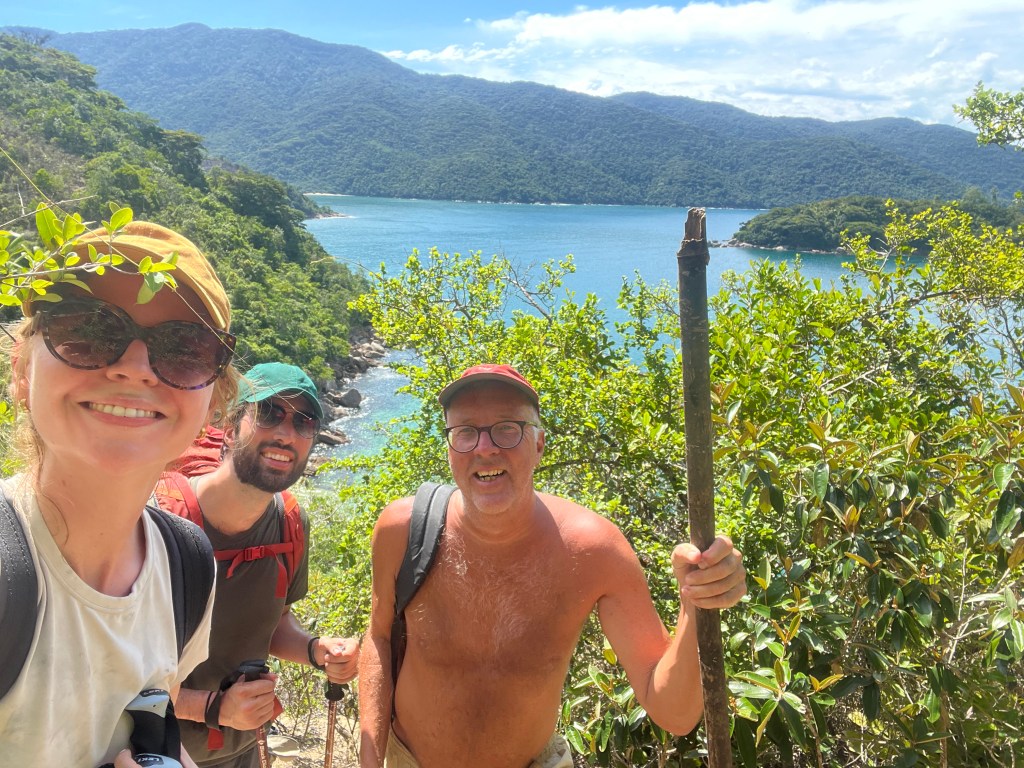
With our new hiking partner we lift our heavy bones off the makeshift beach benches. The start of the trail begins once again deceptively nice, with inviting stone steps making for easier climbing surface. Slowed down by the weight on my back I lag behind. Still, my pride pushes me to stay with the group, not ready to give up just yet on tagging along at their pace. The hike is a coastal one this time, passing through several villages separated by small creeks. Had the path been on sea-level, it would have been a leisurely walk along beautiful blue sea – albeit in the sweltering heat. But the communities here do not rely on these paths, they travel by boat from creek to creek, leaving the land route the secondary option, the less traveled one.
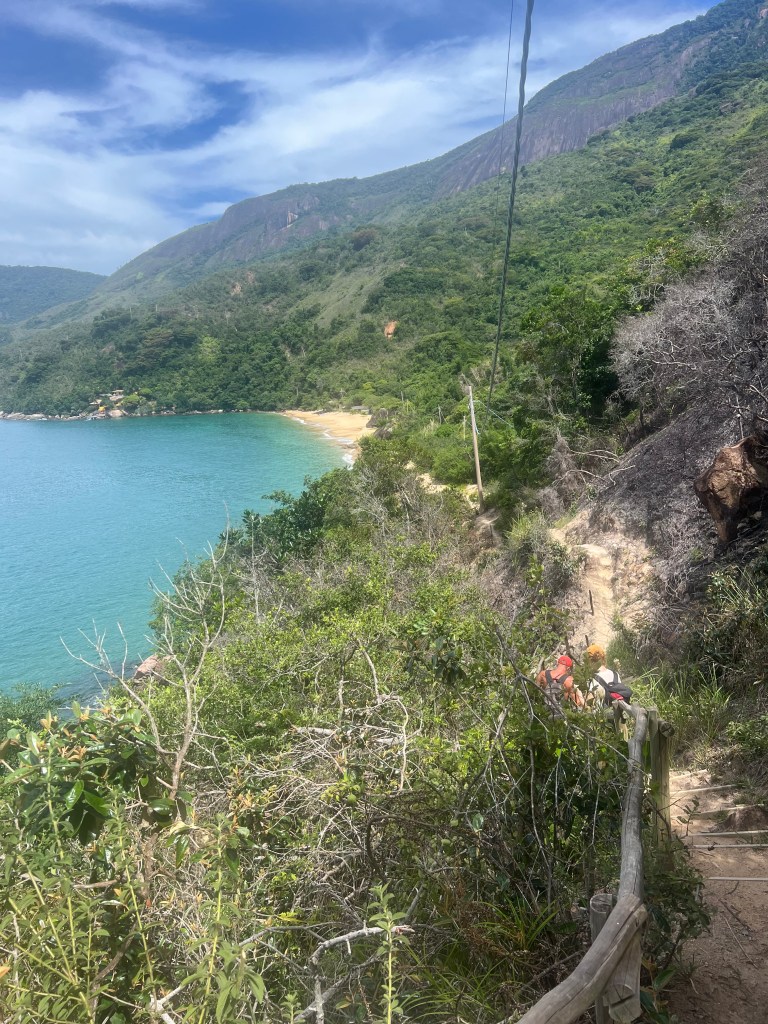
The paths offers little infrastructure to make it’s traversal easier. Trees lay dead upon the path and require us to climb. Rain has washed away the red clay in some places, leaving a slippery canal as the route forward, and oftentimes the way forward asks that you snake away against the rock face. Still, the unstable footing is not the biggest challenge here. Unlike the previous climb, this part of the trail offers little vegetation to protect us from the searing sun. Our endurance is quickly burnt away by the heavy rays. Climbing up I feel the weight of the past few hours crashing down on me, but keep on the pace as best I can. The drier air may allow for an easier time breathing but the heat takes away just as much from me. Yet, after an hour and a half of walking, I start to get used to it more and more, and with my breathing better under control I start having space for more observation. As I look at the blue sea, the luxuriant mountains afar occupy more of my headspace, and I start to imagine our arrival.

As the hours get longer and we get slower, we are starting to get worried to miss our boat. Our new friend sees our mounting anxiety. I feel doubly affected by it being the slowest in the group. The heavy load on my back and the powerful sun leaving me little rest from these thoughts; anyway we push on. With both my gourd and my head getting lighter I push deeper and deeper into my resources to keep going. We reach a hut on the way that afford us protection from the sun and fresh water. Parched and exhausted, I give myself a few savory breaths of air and what seems like a liter of fresh water. My knees and my tights still trembling, my heart still beating strong, we push on.
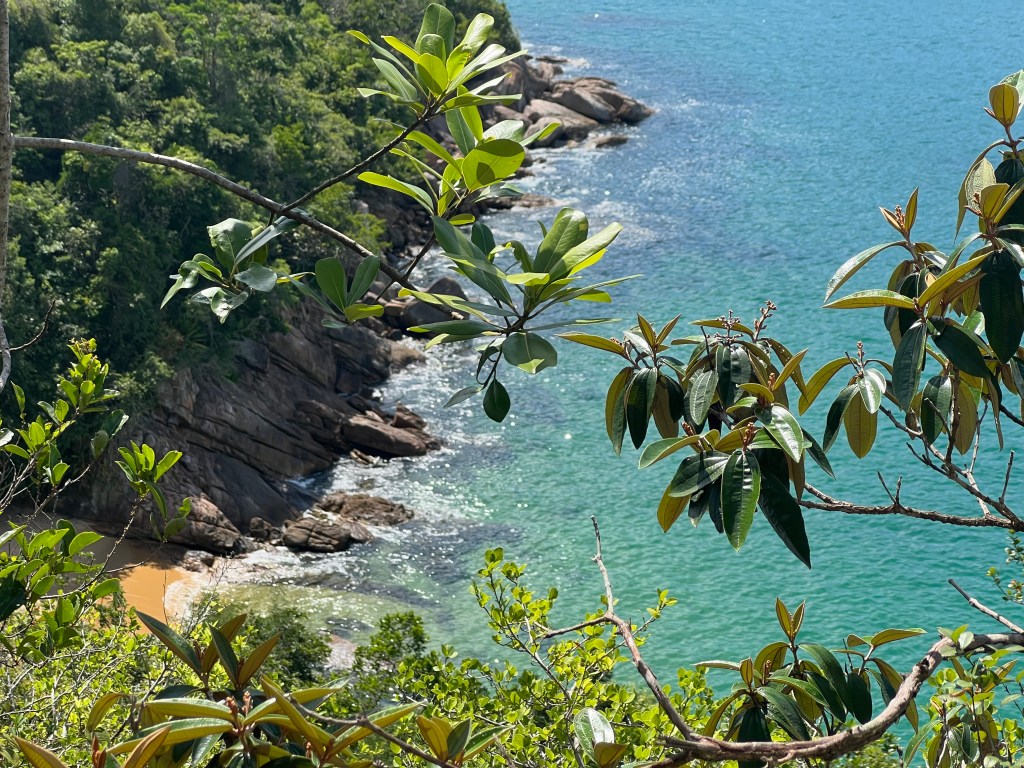
On the next climb Christoph and Leonie try to help me cheer up. We learn about his life in the center of France, planting trees on his father’s prized plot, allows me a distraction from the heavy walk. He even offers to carry my backpack for a while. To everyone’s surprise, including my own, I agree. Finally able to put my ego aside under the weight of my exhaustion, I continue under lighter conditions for a while. The small freshwater creeks we pass along the way seem like paradisiac offerings granting me a chance to cool down and continue a bit more. After a while, my backpack back on my shoulders, we finally seem to approach our destination. Unfortunately, arrival seems ever distant, with each creek seemingly being the last but always hiding one more away.
Still, reality and logic dictate that all good things must end, so it must be the same for difficult things. And in fact we do reach the last hill, and over that last hill the beach we have been reaching for all along. The sight of it feels like relief, but with relief the weight of the effort comes crashing down as well. My legs and my back can’t wait to give way and release and the first sight of a bar has me dropping my backpack and running to the water for a reprieve from the heat. The nine hours we have spent walking will be asking for their toll over the next few days. The taste of the celebratory beer gives me comfort and the sight of the boat pulling in front of the beach eases my anxieties. I know that in a couple of days we have yet another long hike planned, and still, I can’t wait to plunge back into the forest for more.
🇫🇷
En discutant avec nos hôtes à Sao Paulo, Roberto mentionne une randonnée près de Paraty appelée la « Traversia da Juatinga ». Désireux de passer du temps à l’extérieur et attirés aussi par le fait que cette randonnée traverse de la ville de Paraty jusqu’à Trindade (deux villes que nous avions hâte d’explorer à nouveau après notre visite en 2023), nous avons entrepris cette randonnée. Paraty étant situé entre Rio et Sao Paulo, nous avons d’abord imaginé l’entreprendre comme une étape sur le chemin du retour de Rio à Sao Paulo. Nous avions quitté Sao Paulo pour rendre visite à ma famille à Rio et avons dû y revenir plus tard pour prendre possession de notre voiture avant de nous lancer dans une plus grande aventure.
La Traversia de Juatinga est une longue randonnée de 5 jours à travers la forêt tropicale atlantique. Pour m’y préparer, j’ai commencé une routine quotidienne de 1h30 de salle de sport à Rio, suite à un commentaire justifié de Léonie sur ma condition physique. Nous saccageons le Decathlon à Leblon pour trouver des pantalons de randonnée, des protections solaires et des bouteilles d’eau pour nous transporter. Nous n’emportons que peu de nourriture, car le long de la randonnée, il y a beaucoup de communautés Caichaçara qui en fournissent, et nous n’emportons pas non plus de tente ou de sac de couchage, mais nous réservons à l’avance notre hébergement le long de la randonnée. Il ne nous reste plus qu’à trouver un moyen de transport, qui en l’absence de notre voiture, finit par être le bus.
La veille, nous préparons nos sacs à dos pour essayer de porter le moins possible. Le tapis de yoga et un haut-parleur portable feront toutefois partie de la liste des indispensables. Conscients de notre besoin d’eau sous l’été brésilien étouffant, nous emportons environ 1,5L par personne et par jour, environ le double de ce qui est habituellement recommandé pour cette randonnée, et des comprimés purificateurs d’eau pour nous pousser plus loin. Un autre endroit où nous ne parvenons pas à économiser du poids est l’anti-moustiques, et chaque gramme que nous en prenons nous servira bien à la fin. Nous laissons nos ordinateurs portables et n’emportons qu’un petit carnet avec nous pour noter l’heure. Et environ quatre heures et demie plus tard, nous commençons à voir les rues blanches familières de Paraty annoncer le début de notre voyage.
La ville de Paraty est un vestige du colonialisme portugais qui a décidé de s’en tenir à son histoire. Le bâtiment blanc et bleu et les ruelles pavées transportent instantanément leurs visiteurs dans une histoire passée d’extraction d’or et de navires marchands entrant dans sa baie. Aujourd’hui, c’est le point de départ de nombreuses excursions en bateau sur le littoral infiniment complexe qui l’entoure. Entre rochers et forêt, il semble que les gens aient décidé d’installer leurs maisons dans les coins et recoins les plus improbables. Souvent déconnectés de l’eau douce, de l’électricité ou d’Internet, ils sont comme de petites fenêtres paradisiaques accessibles uniquement par la mer.
Le lendemain, après une visite rapide en ville qui m’a valu une casquette et un repas copieux dans un « Comida ao quilo » (un type de restaurant très typique au Brésil, où l’on paie la nourriture sous forme de buffet au kg), nous sommes partis pour notre premier arrêt, Paraty-Mirim. Paraty-Mirim est une communauté encore plus petite, située à l’estuaire de deux rivières qui se mélangent à l’eau de mer. S’y rendre en bus s’avère difficile en raison du caractère aléatoire des horaires de bus, nous nous contentons donc d’un trajet en taxi à la place. En roulant sur la route poussiéreuse, en rebondissant à travers différents nids-de-poule, nous nous dirigeons vers un petit chemin. Le chauffeur de taxi nous dit qu’il n’ira pas plus loin mais que notre auberge est à une petite randonnée dans la forêt. Nous enfilons notre équipement pour notre première randonnée inattendue et goûtons pour la première fois à l’acharnement de la population des moustiques locaux sur le chemin de l’auberge. Déjà, nous commençons à apprécier à quel point nos bâtons de marche seront utiles. En Europe, j’avais l’habitude d’avoir un dédain presque poli pour leur utilisation lors des randonnées ; Ici, avec le terrain accidenté, la boue glissante et le chemin incertain à suivre, ils s’avèrent inestimables.
Nous arrivons à notre auberge et découvrons une construction incroyable, qui semblerait chez elle dans un roman de Robinson Crusoé. Des poutres de bois séparent les planchers déconnectés, ce qui crée une géométrie complexe. On nous montre notre chambre, une petite cabane qui se trouve au-dessus de l’entrée principale, avec seulement un rideau de bambous comme moyen d’intimité. Les habitants de l’auberge eux-mêmes pourraient sortir d’un roman de Jacques Kerouac, et la décoration luxuriante de ce palais caché dans la jungle parle de cet esprit. Nous ne resterons pas assez longtemps pour venir vraiment plonger dans cet endroit car le lendemain se profile tôt pour nous.
A six heures du matin, le réveil sonne pour nous préparer à notre départ, et sous le regard hébété des habitants de l’auberge, revenant à cette même heure, nous nous dirigeons, bâtons de randonnée, chaussettes longues et sac à dos de randonnée à la main. Nous avons organisé un transport en bateau pour la première partie de la randonnée, pour traverser le « Fjord » de Juatinga. Alors que nous atteignons la fin du chemin de terre et que nous arrivons à la jetée, nous nous rendons compte que sans aucun réseau et n’ayant jamais rencontré notre passeur, nous ne sommes peut-être pas dans la meilleure situation pour faire notre voyage. Heureusement, après avoir interrogé quelques pêcheurs sur l’identité de notre mystérieux capitaine, nous montons dans le bateau à fond plat qui nous emmènera de l’autre côté. Le trajet n’est pas long, mais il nous fait gagner de nombreuses heures en nous plaçant au pied de la traversée. Nous posons le pied sur la plage déserte de Praia dos Engenho et, avec un doigt général de notre guide indiquant où commencer la randonnée, nous préparons notre ascension.
Les cent premiers mètres nous donnent un premier avant-goût indulgent de ce qui nous attend. Des marches en granit nous aident à nous élever lentement dans la forêt luxuriante. Le bruit des bateaux est progressivement remplacé par les mélodies toujours changeantes des oiseaux exotiques dans la canopée. Ayant perdu une bonne quantité de sang à cause des piqûres de moustiques dans la première demi-heure, nous décidons d’embrasser le pantalon à fermeture éclair et d’aller jusqu’aux chevilles. La randonnée toutefois perd rapidement son chemin et nous laisse explorer un étroit sentier de boue plutôt qu’un sentier bien défini. Assez vite, ce chemin lui-même disparaît, nous entrons dans une zone d’énormes rochers de granit crachant de l’eau entre les deux.
En sautant entre deux roches, et à l’aide d’une application de suivi, nous parvenons à retrouver notre chemin. À travers un cours d’eau boueux, nous mettons à l’épreuve nos capacités d’escalade et notre équilibre alors que la boue glisse sous nos chaussures. La chaleur commence à mettre à l’épreuve notre endurance, mais encore plus l’humidité, atteignant facilement plus de 85 %. Elle s’accroche à nos vêtements et à notre peau et nous empêche de perdre notre excès de chaleur. Nous nous asseyons pour essorer nos vêtements trempés de sueur et pour laisser notre rythme cardiaque redescendre. En regardant vers l’extérieur, nous voyons les premiers fruits de nos efforts ; Les paysages devant nous, regorgeant d’arbres exotiques, de fleurs multicolores frappant le bleu profond de la baie. L’application de suivi est cependant d’un réalisme malheureux et nous informe que même après 2 heures de cette jungle humide, nous n’avons même pas encore fait la moitié de l’ascension.
Nous continuons la montée. Nous quittons les sentiers boueux de l’eau et entrons dans une forêt de grands arbres et de ruisseaux. La montée ne s’arrête pas, mais l’environnement changeant crée un complexe éblouissant de grandes feuilles, de vignes suspendues et d’animaux qui discutent de leur intérêt pour nous dans leurs nombreuses langues merveilleuses. La forêt est tout aussi escarpée qu’avant. Les coins et recoins que forme les racines créent un motif complexe de marches et d’échelles. Allant toujours plus loin, les plantes se battent pour la lumière et l’eau, saisissant chaque centimètre d’espace qu’elles peuvent. L’ascension nous donne de l’espace pour découvrir les plus petites formes de vie ici ; les fourmis rampant le long des troncs, les araignées créant des toiles complexes et les cigales, faisant exploser leur concerto à travers les arbres. Nous ne pouvons pas nous arrêter longtemps, de peur d’être rattrapés par des vagues de moustiques constamment à nos trousses.
À travers tout cela, l’horizon trouve encore un moyen de se faire voir, lentement puis brusquement nous arrivons à la vue de notre but. La mer bleue resplendissante devant nous, une invitation à la baignade en son sein. Encore devant nous se trouve la moitié du défi, la descente. Elle commence comme l’ascension s’est terminée, lentement puis brusquement. Nous glissons et dérapons sur la boue en descendant. En portant le sac à dos, la descente se rend d’autant plus difficile pour moi, car en plus de mon poids, mes genoux contiennent toutes nos provisions pour les cinq prochains jours. L’effort est différent, au lieu du cardio maintenant mon combat consiste à maintenir mon équilibre, à me rigidifier suffisamment pour assurer une marche stable et à relâcher suffisamment pour nous maintenir en mouvement. Et à travers les toiles d’araignées, les fourmilières, les bosquets de bambous, les ruisseaux et les rochers, nous arrivons enfin de l’autre côté.
Praia Grande est large et vide et évoque la paix, la voir nous fait soupirer de soulagement. Nous sommes en sueur et n’avons qu’une seule chose en tête : entrer dans l’eau. Nos sacs à dos s’envolent de notre dos aussi vite que nos vêtements, et nous plongeons dans ses eaux cristallines. Un arbre s’est aventuré loin sur la plage et semble heureux de partager avec nous sa protection et son ombre. Nous nous permettons de revenir à une température interne plus conforme à la vie qu’à la simple survie. Alors que mon cœur s’arrête de battre la chamade, je sens ses battements lourds dans mes oreilles, alors que je plonge la tête sous l’eau, je me concentre uniquement sur ce son et me laisse fondre pendant un moment.
Le soleil brûlant ne nous offre d’autre abri qu’un seul arbre solitaire, et de toute façon notre itinéraire nous pousse à avancer au bout de quelques heures seulement. Notre logement pour la nuit est encore loin ; à la fin de la journée, j’ai réservé pour que nous soyons transportés à notre hébergement Praia de Sumaca en bateau, mais nous devons arriver au point de prise en charge avant 16h00, car les marées ne nous permettront pas de retarder davantage notre départ. J’ai supposé que les 4 km restants le long de la côte, cette fois avec peu de dénivelé, seraient une histoire plus facile.
Nous sortons donc de Praia Grande et nous nous retrouvons dans la civilisation. La vue d’une cabane est une aubaine , car au cours des dernières heures, notre réserve d’eau s’est évaporée de notre dos. Nous nous asseyons et commandons quelques « pastels » (en un mot : un morceau de pâte huileux et frit, très apprécié au Brésil), un moyen rapide et facile de faire le plein d’énergie nécessaire. Nous nous asseyons pour regarder les vagues revenir alors que la nourriture grille derrière.
Face à cette scène conviviale, un homme amical, Cristoph, s’approche de nous. Il ne peut pas cacher grand-chose de sa nationalité allemande, son ouverture d’esprit et sa volonté de partager ses ressources avec nous, un tic révélateur qui ne peut pas être facilement confondu. Il nous propose de nous accompagner pour le reste de notre voyage, puisqu’il se rend également à Pouso da Cajaiba, notre point de ramassage. Il connaît le chemin. Il nous assure que nous pouvons encore le faire jusqu’à 16h.
Avec notre nouveau partenaire de randonnée, nous soulevons nos os lourds des bancs de plage de fortune. Le début du sentier commence une fois de plus de manière trompeusement agréable, avec des marches en pierre invitantes qui facilitent la surface d’escalade. Ralenti par le poids sur mon dos, je suis à la traîne. Pourtant, ma fierté me pousse à rester avec le groupe, pas encore prêt à abandonner leur rythme. La randonnée est côtière cette fois-ci, en passant par plusieurs villages séparés par de petites criques. Si le chemin avait été au niveau de la mer, cela aurait été une promenade tranquille le long d’une belle mer bleue – bien que dans la chaleur étouffante. Mais les communautés ici ne comptent pas sur ces chemins, elles voyagent en bateau de crique en crique, laissant la route terrestre comme option secondaire, la moins fréquentée.
Les chemins offrent peu d’infrastructure pour faciliter leur traversée. Des arbres sont morts sur le chemin et nous obligent à grimper. La pluie a emporté l’argile rouge à certains endroits, laissant un canal glissant comme voie à suivre, et souvent la voie à suivre demande que vous serpentiez contre la paroi rocheuse. Pourtant, l’assise instable n’est pas le plus grand défi ici. Contrairement à la montée précédente, cette partie du sentier offre peu de végétation pour nous protéger du soleil brûlant. Notre endurance est rapidement brûlée par les lourds rayons du soleil. En montant, je sens le poids des dernières heures s’écraser sur moi, mais je garde le rythme du mieux que je peux. L’air plus sec peut permettre de respirer plus facilement, mais la chaleur m’en enlève tout autant. Pourtant, après une heure et demie de marche, je commence à m’y habituer de plus en plus, et avec ma respiration mieux sous contrôle, je commence à avoir de l’espace pour plus d’observation. En regardant le bleu de la mer, les montagnes luxuriantes au loin occupent davantage mon espace mental, et je commence à imaginer notre arrivée.
Au fur et à mesure que les heures s’allongent et que nous ralentissons, nous commençons à nous inquiéter de manquer notre bateau. Notre nouvel ami voit notre anxiété grandir. Je me sens doublement affecté par le fait qu’il soit le plus lent du groupe. Le lourd fardeau sur mon dos et le soleil puissant me laissant peu de repos à ces pensées ; Quoi qu’il en soit, nous continuons. Avec ma gourde et ma tête qui s’allègent, j’efforce de plus en plus profondément mes ressources à continuer. Nous atteignons une cabane sur le chemin qui nous protège du soleil et de l’eau douce. Desséché et épuisé, je m’accorde quelques bouffées d’air savoureux et ce qui me semble être un litre d’eau douce. Les genoux encore tremblants, le cœur battant encore fort, nous continuons peu après.
Lors de la montée suivante, Christoph et Leonie essaient de m’aider à me remonter le moral. Nous en apprenons plus sur sa vie dans le centre de la France, planter des arbres sur la parcelle prisée de son père dans le Berri. Il me propose même de porter mon sac à dos pendant un moment. À la surprise de tous, y compris la mienne, je suis d’accord. Enfin capable de mettre mon ego de côté sous le poids de mon épuisement, je continue dans des conditions plus légères pendant un moment. Les petites criques d’eau douce que nous traversons en chemin semblent être des offrandes paradisiaques me donnant une chance de me rafraîchir et de continuer un peu plus. Au bout d’un moment, mon sac à dos remis sur mes épaules, nous semblons enfin approcher de notre destination. Malheureusement, l’arrivée semble toujours lointaine, chaque ruisseau semblant être le dernier mais se cachant toujours un de plus.
Pourtant, la réalité et la logique dictent que toutes les bonnes choses ont une fin, il doit donc en être de même pour les choses difficiles. Et en fait, nous atteignons la dernière colline, et au-dessus de cette dernière colline, la plage que nous attendions tant. Sa vue est un vrai soulagement, mais avec le soulagement, le poids de l’effort s’effondre également. Mes jambes et mon dos ont hâte de céder et de se relâcher et la première vue d’un répit me fait laisser tomber mon sac à dos et courir vers l’eau pour un répit de la chaleur. Les neuf heures que nous avons passées à marcher nous feront payer un tribut au cours des prochains jours. Le goût de la bière me réconforte et la vue du bateau qui s’arrête devant la plage apaise mes angoisses. Je sais que dans quelques jours, nous avons encore une autre longue randonnée prévue, et pourtant, j’ai hâte de replonger dans la forêt pour en savoir plus.
🇩🇪
Im Gespräch mit unseren Gastgebern in São Paulo erwähnt Roberto eine Wanderung in der Nähe von Paraty, die “Traversia da Juatinga”. Wir hatten Lust, etwas Zeit im Freien zu verbringen, und wurden davon angezogen, dass diese Wanderung von Paraty bis nach Trindade führt (zwei Städte, die wir nach unserem Besuch im Jahr 2023 unbedingt mehr erkunden wollten). Also machten wir uns daran, diese Wanderung vorzubereiten. Da Paraty zwischen Rio und São Paulo liegt, planten wir sie zunächst als einen Schritt auf dem Rückweg von Rio nach São Paulo. Wir hatten São Paulo verlassen, um meine Familie in Rio zu besuchen, und mussten später dorthin zurückkehren, um unser Auto in Besitz zu nehmen, bevor wir zu unserem größeren Abenteuer aufbrachen.
Die Traversia de Juatinga ist eine 5-tägige Wanderung durch den atlantischen Regenwald. Um mich darauf vorzubereiten, habe ich sogar damit begonnen, in Rio 1h30 täglich ins Fitnessstudio zu gehen, nachdem Leonie einen berechtigten Kommentar über meine körperliche Verfassung gemacht hatte. Wir besorgen uns im Decathlon in Rio Wanderhosen, Sonnenschutz und Wasserflaschen. Wir packen nur wenig Essen ein, da es entlang der Wanderung viele Caichaçara-Gemeinschaften (Strand-Siedlungen) gibt, die uns versorgen können. Wir packen auch kein Zelt oder Schlafsack ein, sondern buchen unsere Unterkünfte entlang der Wanderung im Voraus. Alles, was bleibt, ist, ein Transportmittel zu finden, und das ist in Ermangelung unseres Autos der Bus.
Am Vortag versuchen wir unsere Rucksäcke so zu packen, dass wir so wenig wie möglich mitnehmen. Die Yogamatte und ein tragbarer Lautsprecher schaffen es auf die Liste der unerlässlichen Dinge. Um für den heißen brasilianischen Sommer gewappnet zu sein, packen wir etwa 1,5 l pro Person und Tag ein, und Wasserreinigungstabletten, um um Wasser aus den Flüssen trinken zu können. Ein weiterer Punkt, an dem wir es nicht schaffen, Gewicht zu sparen, ist das Mückenschutzmittel, und jedes Gramm würde sich am Ende bewähren. Wir lassen unsere Laptops liegen und nehmen nur ein kleines Notizbuch mit. Etwa viereinhalb Stunden später sehen wir die vertrauten weißen Straßen von Paraty, die den Beginn unserer Reise ankündigen.
Die Stadt Paraty ist ein Überbleibsel des portugiesischen Kolonialismus, das beschlossen hat, an seiner Geschichte festzuhalten. Die weiß-blauen Gebäude und die grob gepflasterten Gassen versetzen die Besucher sofort in eine verlorene Geschichte von Goldgräbern und Handelsschiffen, die in die Bucht einfuhren. Heute ist es der Ausgangspunkt für viele Bootsausflüge in die unendlich komplexe Küste, die es umgibt. Eingebettet zwischen Felsen und Wäldern scheinen die Menschen beschlossen zu haben, ihre Häuser in den unwahrscheinlichsten Ecken und Winkeln anzusiedeln. Oft von frischem Wasser, Strom oder Internet getrennt, sehen sie alle aus wie kleine Stücke vom Paradies, die nur über das Meer erreichbar sind.
Am nächsten Tag, nach einem kurzen Besuch in der Stadt, der mir eine Cap einbrachte, und einer ansehnlichen Mahlzeit in einer “Comida ao quilo” (ein sehr typisches Restaurant in Brasilien, in dem man für das Buffet nach Kilogramm bezahlt), machten wir uns auf den Weg zu unserem ersten Stopp, Paraty-Mirim. Paraty-Mirim ist eine noch kleinere Gemeinde, die an der Mündung zweier Flüsse liegt, die sich mit dem Meerwasser vermischen. Die Anreise mit dem Bus erweist sich aufgrund der Zufälligkeit des Busfahrplans als schwierig, so dass wir uns stattdessen mit einer Taxifahrt begnügen. Wir fahren auf die staubige Straße, rumpeln über die Schlaglöcher und machen uns auf den Weg zu einem kleinen Pfad. Der Taxifahrer sagt uns, dass er nicht weiter fahren wird, sondern dass unser Hostel eine kleine Wanderung den Wald hinauf ist. Wir schnallen uns unsere Ausrüstung für unsere erste unerwartete Wanderung an und bekommen auf dem Weg zum Hostel einen ersten Eindruck von der Unerbittlichkeit der Mückenpopulation. Wir beginnen zu ahnen, wie nützlich die Wanderstöcke sein werden, die Roberto uns geliehen hat. In Europa hatte ich früher eine gewissen Herablassung für sie, wenn ich sie auf Wanderungen gesehen habe; hier, mit dem unebenen Gelände, dem rutschigen Schlamm und dem unsicheren Pfad erweisen sie sich als unschätzbar wertvoll.
Wir kommen in unserem Hostel an und entdecken eine unglaubliche Konstruktion, die in einem Roman von Robinson Crusoe zu Hause zu sein scheint. Holzbalken trennen getrennte Böden und kreieren eine komplexe Geometrie. Uns wird unser Zimmer gezeigt, eine kleine Hütte aus Bambusstämmen, die über dem Haupteingang thront und nur einen Vorhang als Privatsphäre hat. Die Bewohner des Hostels selbst könnten einem Roman von Jacques Kerouac entsprungen sein, und die üppige Dekoration dieses versteckten Dschungelpalastes spricht diesen Geist an. Wir werden nicht genug bleiben, um wirklich in diesen Ort einzutauchen, da der nächste Tag für uns früh beginnt.
Um sechs Uhr morgens klingelt der Wecker, um uns für den Start unserer Wanderung aufzuscheuchen. Unter den benommenen Blicken der anderen Hostelbewohner, die zu dieser Stunde zurückkommen, machen wir uns auf den Weg – Wanderstöcke, lange Socken und Wanderrucksack im Schlepptau. Für den ersten Teil der Strecke haben wir einen Bootstransport organisiert, um den “Fjord” von Juatinga zu überqueren. Als wir das Ende der Schotterstraße und den Steg erreichen, stellen wir fest, dass wir ohne Handyempfang und ohne unseren Fährmann nicht in der besten Ausgangssituation sind. Nachdem wir ein paar Fischer über die Identität unseres mysteriösen Fährmanns befragt haben, steigen wir glücklicherweise auf das Plattbodenboot, das uns hinüberbringen wird. Die Fahrt ist nicht lang, aber sie spart uns viele Stunden. Wir setzen einen Fuß auf den leeren Strand von Praia dos Engenho und folgen dem generellen Fingerzeig unseres Fährmanns um unseren Aufstieg zu beginnen.
Die ersten hundert Meter geben uns einen schonungslosen Vorgeschmack auf das, was noch kommen wird. Granitstufen helfen uns, langsam in den üppigen Wald aufzusteigen. Die Geräusche der Boote werden nach und nach durch die ständig wechselnden Melodien exotischer Vögel im Blätterdach ersetzt. Nachdem wir in der ersten halben Stunde eine gute Menge Blut durch Mückenstiche verloren haben, beschließen wir, uns auf die nerdige Reißverschlusshose einzulassen und sie knöchellang zu verlängern. Die Wanderung gewinnt schnell an Schwierigkeit und verwandelt sich eher in einen schmalen Schlammpfad als einen klar definierten Weg. Bald verschwindet auch dieser Schlammpfad und wir betreten ein Gebiet voll riesiger Granitfelsen, zwischen denen Wasser sprudelt.
Mit Hilfe einer Tracking-App bleiben wir grob auf dem Weg. Der Schlamm rutscht unter unseren Schuhen durch. Die Hitze fordert unsere Ausdauer heraus, aber noch mehr die Luftfeuchtigkeit, die bei über 85 % liegt. Sie haftet an unserer Kleidung und unserer Haut und verhindert, dass wir unsere überschüssige Wärme verlieren. Wir setzen uns, um unsere schweißnassen Klamotten auszuwringen und unseren Puls wieder sinken zu lassen. Wir beginnen jedoch auch die ersten Früchte unserer Bemühungen zu sehen; die Landschaften vor uns ist voll von exotischen Bäumen und bunten Blumen, die sich vom tiefen Blau der Bucht abheben. Die Tracking-App ist jedoch ein unangenehmer Realist und informiert uns, dass wir selbst nach zwei Stunden in diesem feuchten Dschungel noch nicht einmal die Hälfte des Aufstiegs geschafft haben.
Wir setzen den Aufstieg fort. Wir verlassen die schlammigen Wasserwege und betreten einen Wald aus hohen Bäumen und Bächen. Die Steigung lässt nicht nach, aber die sich verändernde Umgebung schafft einen schillernden Komplex aus riesigen Blättern, Lianen und Tieren, die in ihren vielen wunderbaren Sprachen über uns Besucher sprechen. Die Ecken und Winkel, die das Wurzelsystem bildet, bilden ein kompliziertes Muster von Stufen und Leitern, die nach oben führen. Die Pflanzen kämpfen um Licht und Wasser und greifen nach jedem Zentimeter, um sich aneinander in die Höhe zu ziehen. Der Aufstieg gibt uns Raum, die kleineren Lebensformen hier zu entdecken; die Ameisen, die an den Stämmen hochkrabbeln, die Spinnen, die komplizierte Netze bilden, und die Zikaden, die ihr Konzert über die Bäume hinweg schicken. Wir können aber nie lange anhalten, denn sonst werden wir von Mücken überrollt, die uns ständig auf den Fersen sind.
Durch all das findet der Horizont immer noch einen Weg, sich ab und an sichtbar zu machen. Langsam und dann ganz plötzlich erstreckt sich unser Ziel vor uns. Das strahlend blaue Meer vor uns ist eine Einladung. Doch noch immer vor uns liegt die halbe Strecke: der Abstieg. Das Tragen des Rucksacks erschwert mir den Abstieg, da meine Knie auf meinem Gewicht all unseren Proviant für die nächsten fünf Tage halten. Die Anstrengung ist eine andere, statt Cardio besteht mein Kampf jetzt darin, das Gleichgewicht zu halten; mich genug anzuspannen, um einen stabilen Stand zu gewährleisten, und genug loszulassen, um in Bewegung zu bleiben. Und durch die Spinnweben und die Ameisenhügel und die Bambushaine und die Bäche und die Felsen kommen wir schließlich auf die andere Seite.
Praia Grande ist weit und leer und friedlich. Wir atmen erleichtert auf. Wir sind völlig verschwitzt und haben nur eines im Sinn: ins Wasser zu springen. Unsere Rucksäcke fliegen so schnell von unserem Rücken wie unsere Kleidung, und wir tauchen ein in das türkise Wasser. Ein Baum hat sich weit an den Strand hinausgewagt und scheint froh zu sein, seinen Schutz und Schatten mit uns zu teilen. Unsere Körpertemperatur normalisiert sich langsam. Als mein Herz aufhört zu rasen, spüre ich, wie es schwer in meinen Ohren schlägt. Unter Wasser konzentriere ich mich allein auf diesen Klang und lasse mich für eine Weile treiben.
Die sengende Sonne bietet uns keinen anderen Schutz als den einsamen Baum, und unsere Reiseroute drängt uns nach ein paar Stunden zum Weiterziehen. Unsere Unterkunft für die Nacht liegt noch in weiter Ferne; am Ende des Tages hatte ich dafür gesorgt, dass wir mit dem Boot zu unserer Unterkunft Praia de Sumaca transportiert werden, aber wir müssen vor 16:00 Uhr am Abholpunkt sein, da die Gezeiten keine weiteren Verzögerungen zulassen. Ich ging davon aus, dass die übrig gebliebenen 4 km entlang der Küste, diesmal ohne bewaldete Hügel, ein leichteres Unterfangen sein würden.
Wir machen uns also auf den Weg aus Praia Grande heraus und finden an dessen anderen Ende ein kleines bisschen Zivilisation. Der Anblick ist willkommen, da in den letzten Stunden unser Wasservorrat von unserem Rücken verdunstet war. Wir setzen uns hin und bestellen ein paar “Pastels” (kurz gesagt: ein öliges, frittiertes Stück Teig, das in Brasilien sehr beliebt ist), eine schnelle und einfache Möglichkeit, die nötige Energie zu tanken. Wir sitzen und beobachten die Wellen, während sie im Hintergrund fritiert werden.
Bei diesem einladenden Anblick tritt ein freundlicher Mann, Cristoph, auf uns zu. Er kann seine deutsche Nationalität nicht lang verbergen – seine ehrliche Offenheit und Bereitschaft, seine Ressourcen zu teilen; für mich ein klares Zeichen. Er bietet uns an, uns auf dem Rest unserer Wanderung zu begleiten, da er auch nach Pouso da Cajaiba, unserem Abholpunkt, zurückkehren muss. Er kennt den Weg und versichert uns, dass wir es noch bis 16 Uhr schaffen können.
Mit unserem neuen Wanderpartner heben wir unsere schweren Knochen von den provisorischen Strandbänken. Der Start des Weges beginnt wieder täuschend einfach, mit einladenden Steinstufen, die eine leichtere Kletterfläche bieten. Gebremst durch das Gewicht auf meinem Rücken bleibe ich jedoch etwas zurück. Trotzdem treibt mich mein Stolz an, bei der Gruppe zu bleiben. Die Wanderung ist diesmal eine Küstenwanderung, die durch mehrere kleiner Stranddörfer führt, die durch kleine Bäche getrennt sind. Wäre der Weg auf Meereshöhe verlaufen, wäre es ein gemütlicher Spaziergang entlang des wunderschönen blauen Meeres gewesen – wenn auch in der brütenden Hitze. Aber die Gemeinden hier verlassen sich nicht auf diese Wege, sie fahren mit dem Boot von Bach zu Bach, so dass der Landweg die zweitrangige Option ist, die weniger bereiste.
Der Pfad geht steil auf und ab und bietet wenig Infrastruktur. Bäume liegen tot auf dem Weg und zwingen uns zum Klettern. Der Regen hat den roten Lehm an einigen Stellen weggespült und einen rutschigen Kanal als Weg hinterlassen, und oft müssen wir uns eine Felswand entlangschlängeln. Dennoch ist der instabile Untergrund hier nicht die größte Herausforderung. Im Gegensatz zum vorherigen Anstieg bietet dieser Teil des Weges wenig Vegetation, um uns vor der sengenden Nachmittagssonne zu schützen. Unsere Ausdauer wird von den sengenden Strahlen schnell verbrannt. Beim Klettern spüre ich, wie das Gewicht der letzten Stunden auf mich niederprasselt, aber halte das Tempo so gut es geht aufrecht. Die trockenere Luft erleichtert mir vielleicht das Atmen, aber die Hitze nimmt mir genauso viel Energie. Nach eineinhalb Stunden gewöhne ich mich immer mehr daran, und da ich meine Atmung besser unter Kontrolle habe, habe ich Raum für mehr Beobachtung. Als ich auf das blaue Meer schaue, nehmen die üppigen Berge in der Ferne mehr Raum in meinem Kopf ein, und ich beginne, mir unsere Ankunft vorzustellen.
Die Stunden gehen dahin und wir werden immer langsamer und fangen wir an, uns Sorgen zu machen, unser Boot zu verpassen. Unser neuer Freund sieht unsere wachsende Angst. Ich fühle mich doppelt davon betroffen, dass ich der langsamste in der Gruppe bin. Die schwere Last auf meinem Rücken und die mächtige Sonne ließen mir wenig Ruhe von diesen Gedanken; trotzdem machen wir weiter. Während sowohl meine Wasserreserven als auch mein Kopf leichter werden, greife ich immer tiefer in meine Ressourcen, um weiterzumachen. Unterwegs erreichen wir eine Hütte, die uns Schutz vor Sonne und frisches Wasser bietet. Ausgetrocknet und erschöpft gönne ich mir ein paar schmackhafte Atemzüge und frisches Wasser. Meine Knie und meine Waden zittern immer noch, mein Herz schlägt stark, aber wir gehen weiter.
Christoph und Leonie versuchen mir zu helfen und mich aufzumuntern. Christoph erzählt mir über sein Leben im Zentrum Frankreichs, das Pflanzen von Bäumen auf dem schönen Grundstück seines Vaters, was mir etwas Ablenkung ermöglicht. Er bietet mir sogar an, meinen schweren Rucksack für eine Weile zu tragen. Zur Überraschung aller, auch meiner eigenen, stimme ich dem zu. Endlich in der Lage, mein Ego unter dem Gewicht meiner Erschöpfung beiseite zu legen, mache ich eine Weile unter leichteren Bedingungen weiter. Die kleinen Süßwasserbäche, die wir auf dem Weg passieren, wirken wie paradiesische Oasen. Ich kann mich abkühlen und noch ein bisschen weitergehen. Nach einer Weile, den Rucksack wieder auf den Schultern, scheinen wir uns endlich unserem Ziel zu nähern. Leider scheint die Ankunft immer nur noch ein kleines Stückchen weiter weg zu liegen; jede Biegung ist scheinbar die letzte, verbirgt aber eine weitere.
Dennoch diktieren Realität und Logik, dass alle guten Dinge enden müssen, also muss es auch für schwierige Dinge so sein. Und tatsächlich erreichen wir den letzten Hügel, und über diesen letzten Hügel den Strand, der den ganzen Tag unser Ziel war. Der Anblick ist eine große Erleichterung, aber mit der Erleichterung bricht auch das Gewicht der Anstrengung über mir zusammen. Meine Beine und mein Rücken können es kaum erwarten, nachzugeben und loszulassen. Beim ersten Anblick lasse ich meinen Rucksack fallen. Die neun Stunden, die wir zu Fuß unterwegs waren, werden in den nächsten Tagen ihren Tribut fordern. Der Geschmack des Bieres in meiner Hand ist festlich, und der Anblick des Bootes, das vor dem Strand hält, vertreibt meine Ängste. Ich weiß, dass wir in ein paar Tagen wieder eine lange Wanderung geplant haben, und trotzdem kann ich es kaum erwarten, wieder in den Wald einzutauchen, um mehr davon zu kriegen.

 Die Große Plan
Leave a comment