
Its been one week since we arrived in Brazil. Our plan to ‚not have a plan’ resulted in us staying for this whole week here with our unexpected hosts. Roberto and Glicia are old school friends of Marc’s mother, and have been going above and beyond to make our arrival in their country as smooth as possible. Taking us in at their beautiful house at the outskirts of São Paulo, they have been offering us the slowing down that we so much needed, helped us with more administrative hurdles than we anticipated, and fed us way more ‘Pão de queijos’ than we care to admit.

Although our initial plan had been to continue on to Rio by bus as soon as possible, we soon learned from Roberto that for our plan to buy our own car, we should better do this here in São Paulo, and this is what we ended up dedicating much of this first week too. I don’t know how we would have managed without Roberto’s help and Marc’s patience, but by the end of day 6, thanks to Roberto’s negotiation poker face, we sealed a deal – a used 2012 Mitsubishi Pajero 4×4, fittingly in dark green, a real jungle-car. Name contestants are Abacaxi, Arapaima, or Anteater.
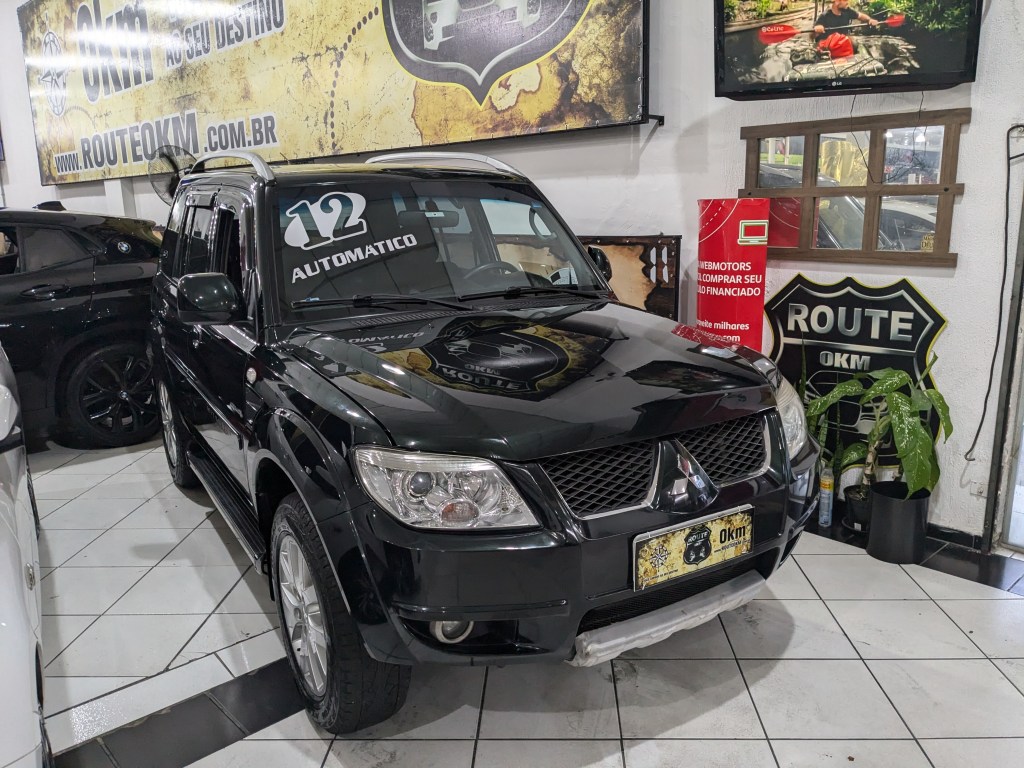
The papers needed for this purchase were (and still are) a pain to acquire, and we spent many hours in Roberto’s car, going around from police offices to other administrative places. We are stunned and moved by the naturalness with which he and Glicia started sharing their house with us, without having planned to do so, offering us to stay as long as we want – and meaning it. They cooked for us multiple times every day, drove us around for hours, made phone calls for us, and much more. This kind of behavior is not even a question here. I don’t know if we would have done the same in our own home, in our own lives – we certainly would have felt like its quite a big sacrifice. Have we lost a level of human support and decency in Europe still very much self-evident in other parts of the world? Its true, today we are learning to set boundaries more in order to protect our own time and needs, but is our soul too closed off to see the beauty of selflessly helping others?


São Paulo is the largest city in Brazil, the Americas and the Western and Southern Hemisphere, 22 million inhabitants, and a heavily trafficked expanse of high-rises that sit oddly between the massive jungle trees. We were so grateful to be spending our first week away from this noise and energy. Although we enjoyed one day of exploring in São Paulo, visiting the incredible Art Museum (MASP) and the Japanese neighborhood of Liberdade, our interests here in South America lie much more in exploring its natural beauties and the connections with its people than its cities.
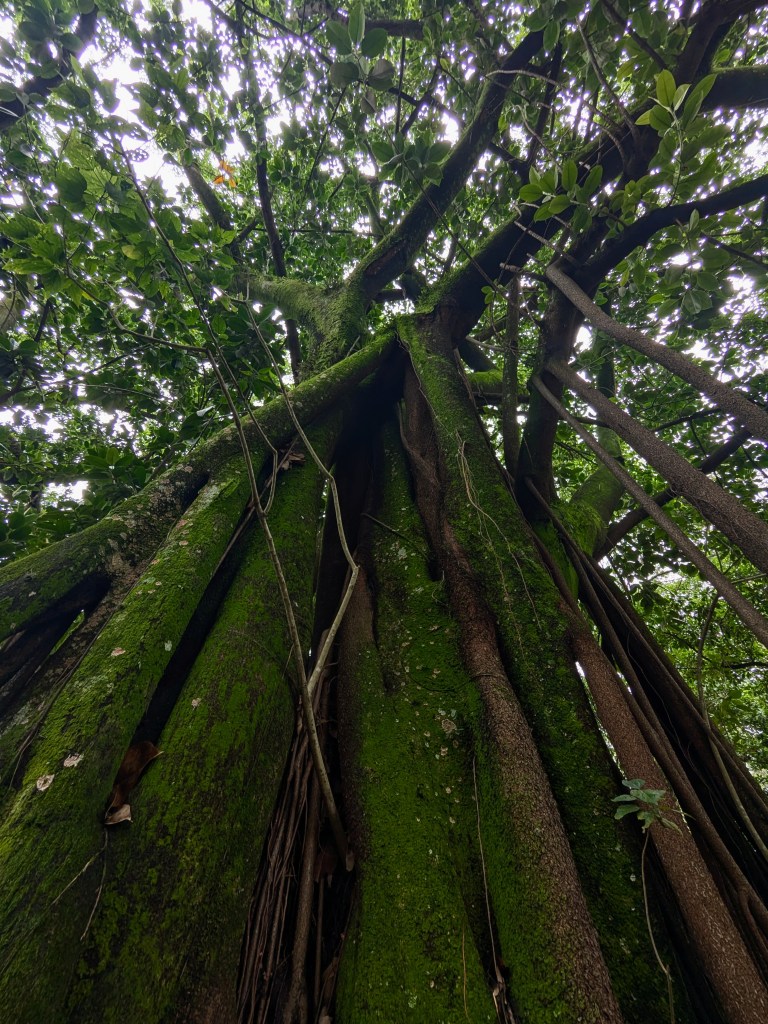
Granja Viana, the suburb where we stayed, still preserved more of that – we were stunned by the variety of trees, such as the gum trees or the ficus, easily growing 7 meters in widths, or the psychedelic-looking flowers that casually grow on the roadside here. However, Glicia has been sharing sad stories of how she and her family have watched the human hunger for expansion swallow more and more land, all the creeks and rivers growing polluted and stale, and most of the visiting wildlife of the past, such as Cutia – got lost. Populations grow, people need room to live, and on top of that the room they take to live is becoming bigger and bigger. We already feel that this tragic story of our time, the loss of a healthy relationship between humans and nature, will be a part of our journey; and we have been thinking a lot about how we have contributed to this through our own choices, and how we can minimize – or even help reverse – this through actions we will take on this trip.
Nevertheless, this first week already offered many magical moments of connection with tranquility. On our very first morning, when we walked out to the beautiful breakfast that was prepared for us on the terrace surrounded by a wall of palmtrees, we got our first visit from a group of small maquaque monkeys. The fruits, that Roberto only reluctantly let us taste because ‘it is not ripe enough’ had so much flavor, we felt like we don’t want to eat anything else than fruit while we are here. We experienced our first tropical rain, starting and stopping as suddenly as if someone opened a faucet, huge warm raindrops, loud enough to drown out our conversation. It made the whole house smell deliciously like rich, dark earth.

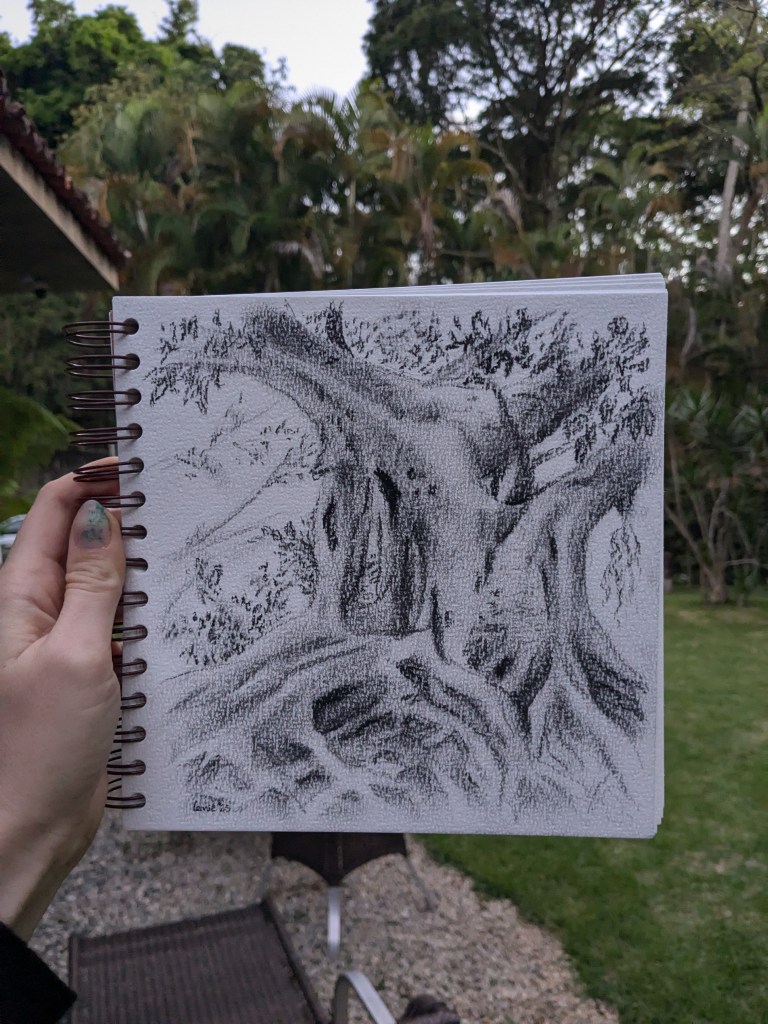
This first week has not been only vacation mode. Marc has been grappling with the weight of the Brazilian admistration, realizing each days held a new form of complexity and problems to disentangle. Navigating it has been like walking through mud, a tiresome affair that you always feel is almost over but really sinks you back in again and again.
Meanwhile, I have invested a bit of time every day to start researching avenues for a possible career change towards working with psychedelics in some capacity or supporting the transition to a more mindful society. Now is the time to explore whether during the time off, I would want to enroll in some of the many interesting courses that could pave this way – such as psychedelic facilitator or mindfulness teacher trainings. I feel a lot of motivation and excitement for these ideas, but at the same time, learning to do nothing and regarding pure joy and presence as equally meaningful is a higher goal for me and not always easy. I need to sit really still with myself and look really closely to tell apart a genuine and joyful hunger for learning and supporting what matters to me from simply struggling to let go of the ‘after’ and the general productivity mindset.
Whatever we do next – be it professional, in terms of social action, or otherwise – we want it to come out of joy, not out of fear. Getting informed is a necessary part of the process for this goal, but Marc and I are limiting this time spent on anything else but the present moment. The reality of freedom is starting to creep into our consciousness. Every morning, I got up at sunrise to practice an hour of Vipassana meditation outside, while everyone was still asleep except the green parrots that were starting their shrieking conversations. I am so grateful for the Vipassana course I had the chance to do just before we left – the Vipassana meditation practice helps a lot with remaining equanimous and enjoying the process. It is taking a while for both of us to truly realize we have started ‘Die Große Plan’, we are free to live each day as we please, now, tomorrow, for along time to come – and, really, as this trip might teach us, any days of our lives?
“I was bored yesterday for half a second – and I felt great after it!”
– from the game ‘Everything’, based on Alan Watts
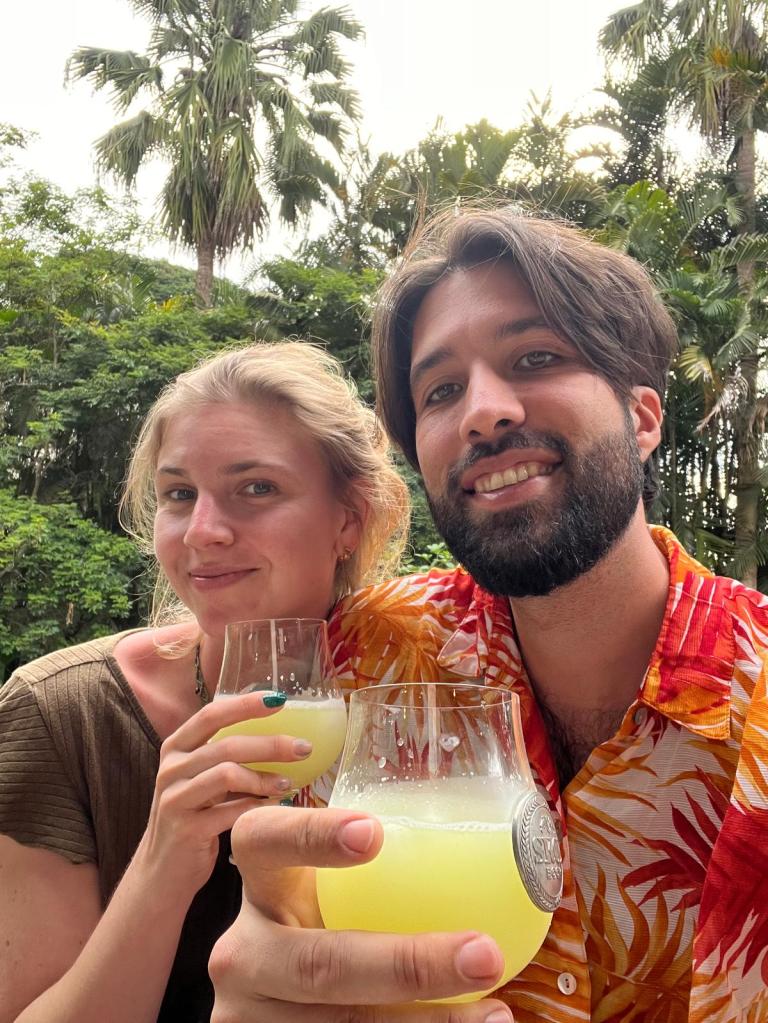
When Marc walked out with a freshly pressed lime-juice one morning after I finished my yoga practice surrounded by parrots, I asked him ‘This is our life now?’, and it started to hit. Now that the car is bought and will be with a mechanic for a while for some checks and improvements, we hopped on a long-distance bus to Rio de Janeiro, where we will finally arrive at Marc’s family. They have been giving us multiple impatient calls every day and are awaiting us excitedly.
PS: Why is ‘Die Große Plan‘ called ‘Die Große Plan‘?
‘Die Große Plan’ is an intentional grammatical error meant to send us on a path of accepting unexpected deviations. At the time this idea first entered our minds – to give up everything and create a true blank slate, real freedom to take our most authentic decisions for our future together – two years ago, we were driving down a desert road in Morocco, and we were still doing a little better with Marc’s daily German-lesson. Referring to the idea as ‘the big plan’ turned into ‘Der Große Plan’ during German-time, but Marc’s consistent error to choose the wrong article ‘Die’ was so endearing to me that we decided to stick with it. It’s the perfect name to encapsule our approach to this time of our lives: a time open for surprises, unexpected turns, and moments that will not go as we had anticipated, but might make us smile.
Es ist jetzt eine Woche her, dass wir in Brasilien angekommen sind. Unser Plan, „keinen Plan zu haben“, führte dazu, dass wir die ganze Woche bei unseren unerwarteten Gastgebern verbrachten. Roberto und Glicia sind alte Schulfreunde von Marcs Mutter und haben alles getan, um unsere Ankunft in ihrem Land so reibungslos wie möglich zu gestalten. Sie haben uns in ihrem schönen Haus am Stadtrand von São Paulo aufgenommen und uns die Entschleunigung geboten, die wir so dringend brauchten. Sie haben uns bei mehr administrativen Hürden geholfen, als wir erwartet hatten, und uns mit viel mehr „Pão de queijos“ gefüttert, als gut wir zugeben möchten.
Obwohl unser ursprünglicher Plan war, so schnell wie möglich mit dem Bus nach Rio weiterzufahren, erfuhren wir von Roberto, dass wir unseren Plan, ein eigenes Auto zu kaufen, besser hier in São Paulo umsetzen sollten. Dem widmeten wir schließlich einen Großteil dieser ersten Woche. Ich weiß nicht, wie wir es ohne Robertos Hilfe und Marcs Geduld geschafft hätten, aber am Ende von Tag 6 hatten wir dank Robertos Verhandlungstaktiken einen Deal abgeschlossen – einen gebrauchten 2012er Mitsubishi Pajero 4×4, passenderweise in Dunkelgrün, ein echtes Dschungelauto. Die Namen der Kandidaten sind Abacaxi, Arapaima oder Anteater (Ameisenbär).
Die für den Kauf benötigten Papiere waren (und sind) mühsam zu beschaffen, und wir verbrachten viele Stunden in Robertos Auto, um von Polizeibüros zu anderen Verwaltungsstellen zu fahren. Wir sind verblüfft und gerührt von der Selbstverständlichkeit, mit der er und Glicia ihr Haus mit uns teilten, ohne dies geplant zu haben, und uns anboten, so lange zu bleiben, wie wir wollten – und es auch so meinten. Sie kochten mehrmals am Tag für uns, fuhren uns stundenlang herum, telefonierten für uns und vieles mehr. Diese Art von Verhalten steht hier nicht einmal in Frage. Ich weiß nicht, ob wir in unserem eigenen Haus, in unserem eigenen Leben, das Gleiche getan hätten – wir hätten es sicherlich als ein großes Opfer empfunden. Haben wir in Europa ein Maß an menschlicher Unterstützung und Anstand verloren, das in anderen Teilen der Welt noch sehr selbstverständlich ist? Es stimmt, dass wir heute lernen, mehr Grenzen zu setzen, um unsere eigene Zeit und unsere Bedürfnisse zu schützen, aber ist unsere Seele zu verschlossen, um die Schönheit der selbstlosen Hilfe für andere zu sehen?
São Paulo ist die größte Stadt Brasiliens, Amerikas und der westlichen und südlichen Hemisphäre, mit 22 Millionen Einwohnern (nach konservativer Schätzung), eine riesige Fläche von Hochhäusern, die seltsam zwischen den massiven Dschungelbäumen hervorragen. Wir waren so dankbar, dass wir unsere erste Woche weit weg von diesem Lärm und dieser Energie verbringen konnten. Obwohl wir einen Tag in São Paulo verbrachten und das unglaubliche Kunstmuseum (MASP) und das japanische Viertel Liberdade besuchten, gilt unser Interesse hier in Südamerika viel mehr der Verbindung mit der Natur und der Beziehung zu den Menschen als den Städten.
Granja Viana, der Vorort, in dem wir wohnten, hat noch mehr davon bewahrt – wir waren verblüfft von der Vielfalt der Bäume, wie zum Beispiel dem Ficus, der leicht 7 Meter breit wird, oder den psychedelisch aussehenden Blumen, die hier ganz beiläufig am Straßenrand wachsen. Glicia hat jedoch auch traurige Geschichten darüber erzählt, wie sie und ihre Familie mit ansehen mussten, wie der menschliche Expansionshunger immer mehr Land verschlang, wie alle Bäche und Flüsse verschmutzt und versiegt wurden und wie die meisten Wildtiere, die hier früher heimisch waren, wie zum Beispiel das niedliche Cutia, verloren gingen. Die Bevölkerung wächst, die Menschen brauchen Platz zum Leben, und obendrein wird der Raum, den sie zum Leben nutzen, immer größer. Wir haben bereits das Gefühl, dass diese tragische Geschichte unserer Zeit, der Verlust einer gesunden Beziehung zwischen Mensch und Natur, ein Teil unserer Reise sein wird; und wir haben viel darüber nachgedacht, wie wir durch unsere eigenen Entscheidungen dazu beigetragen haben, und wie wir dies durch die Entscheidungen, die wir auf dieser Reise ergreifen werden, minimieren – oder sogar umkehren – können.
Dennoch bot diese erste Woche bereits viele magische Momente der Verbindung mit der Ruhe. Gleich am ersten Morgen, als wir zu dem herrlichen Frühstück gingen, das für uns auf der von einer Palmenwand umgebenen Terrasse vorbereitet wurde, bekamen wir zum ersten Mal Besuch von einer Gruppe kleiner Maquaque-Affen. Die Früchte, die Roberto uns nur widerwillig probieren ließ, weil sie ‚noch nicht reif genug‘ waren, hatten so viel Geschmack, dass wir das Gefühl hatten, nichts anderes als Obst essen zu wollen, solange wir hier sind. Wir erlebten unseren ersten tropischen Regen, der so plötzlich einsetzte und wieder aufhörte, als hätte jemand einen Wasserhahn aufgedreht, riesige warme Regentropfen, laut genug, um unsere Unterhaltung zu übertönen. Das ganze Haus duftete magisch nach reicher, dunkler Erde.
Diese erste Woche war jedoch nicht nur Urlaubszeit. Marc hat sich mit der Last der brasilianischen Verwaltung auseinandergesetzt und festgestellt, dass jeder Tag eine neue Form von Komplexität und Problemen mit sich bringt, die es zu entwirren gilt. Es fühlt sich an wie Schlamm, eine mühsame Angelegenheit, von der man immer denkt, dass sie fast vorbei ist, aber in Wirklichkeit versinkt man immer wieder darin.
In der Zwischenzeit habe ich jeden Tag ein wenig Zeit investiert, um nach Wegen für eine mögliche berufliche Veränderung in Richtung einer Arbeit mit Psychedelika oder für eine achtsamere Gesellschaft zu suchen. Jetzt ist es an der Zeit zu erkunden, ob ich während meiner Auszeit einige der vielen interessanten Kurse belegen möchte, die mir diesen Weg ebnen könnten – wie zum Beispiel die Ausbildung zum psychedelischen Begleiter oder zum Achtsamkeitslehrer. Ich spüre viel Motivation und Begeisterung für diese Ideen, aber gleichzeitig ist es mein höchstes Ziel, zu lernen, nichts zu tun und reine Freude und Gegenwart als wertvoll zu betrachten. Ich muss wirklich still bei mir sitzen und genau hinschauen, um eine authentische Freue am Lernen und die Begeisterung dafür, zu unterstützen, an was ich glaube, davon zu unterscheiden, wenn ich nur das „Danach“ nicht loslassen kann und ein allgemeiner Produktivitätsdruck überhand nimmt.
Was auch immer wir als Nächstes tun – sei es beruflich, durch unseres soziales Engagement oder im Privatleben – wir wollen, dass es aus Freude geschieht und nicht aus Angst. Sich zu informieren ist ein notwendiger Teil des Prozesses, um dieses Ziel zu erreichen, aber Marc und ich beschränken bewusst die Zeit, die wir mit irgendetwas etwas anderem als dem gegenwärtigen Moment verbringen. Die Realität der Freiheit beginnt, sich in unser Bewusstsein zu schleichen. Jeden Morgen bin ich bei Sonnenaufgang aufgestanden, um draußen eine Stunde Vipassana-Meditation zu praktizieren, während alle noch schliefen, außer den grünen Papageien, die begannen, sich kreischend zu unterhalten. Ich bin so dankbar für den Vipassana-Kurs, den ich kurz vor unserer Abreise machen konnte – die Vipassana-Meditationspraxis hilft sehr dabei, gleichmütig und dankbar zu bleiben in jedem Moment. Es dauert eine Weile, bis wir beide wirklich begreifen, dass wir den Großen Plan“ begonnen haben; dass wir frei sind, jeden Tag so zu leben, wie es uns gefällt, jetzt, morgen, für eine lange Zeit – und, wie uns diese Reise lehren könnte, wirklich jeden Tag unseres Lebens?
„Ich habe mich gestern eine halbe Sekunde lang gelangweilt – und es war großartig!“
– aus dem Spiel ‚Everything‘, basierend auf den Lehren von Alan Watts
Als Marc eines Morgens, nachdem ich meine Yogapraxis inmitten von Papageien beendet hatte, mit einem frisch gepressten Limettensaft aus dem Haus kam, fragte ich ihn: „Das ist jetzt unser Leben?“, und es begann auf uns einzuwirken. Jetzt, wo das Auto gekauft ist und für einige Zeit bei einem Mechaniker zur Überprüfung und Verbesserung ist, sind wir in einen Fernbus nach Rio de Janeiro gestiegen, wo wir endlich bei Marcs Familie angekommen sind. Sie haben uns jeden Tag mehrfach ungeduldig angerufen und sehnsüchtig erwartet.
Warum „Die Große Plan“ ?
„Die Große Plan“ ist ein absichtlicher grammatikalischer Fehler, der uns auf einen Weg schicken soll, auf dem wir unerwartete Abweichungen in Kauf nehmen. Als uns diese Idee zum ersten Mal in den Sinn kam – alles aufzugeben und ein echtes weißes Blatt zu schaffen, echte Freiheit, um unsere authentischsten Entscheidungen für unsere gemeinsame Zukunft zu treffen – fuhren wir vor zwei Jahren eine Wüstenstraße in Marokko entlang, und wir waren noch ein wenig gewissenhafter mit Marcs täglichem Deutsch-Unterricht. Aus ‚The big plan‘ wurde während der Deutschstunde ‘Der Große Plan’, aber Marcs ständiger Fehler, den falschen Artikel ‘Die’ zu wählen, war mir so sympathisch, dass wir beschlossen, dabei zu bleiben. Es ist der perfekte Name, um unsere Herangehensweise an diese Zeit unseres Lebens zu beschreiben: eine Zeit, die offen ist für Überraschungen, unerwartete Wendungen und Momente, die nicht so verlaufen, wie wir es uns vorgestellt haben, uns aber zum Lächeln bringen können.
Celà fait une semaine que nous sommes arrivés au Brésil. Notre plan de « ne pas avoir de plan » a abouti à ce que nous restions toute cette semaine ici avec nos hôtes inattendus. Roberto et Glicia sont des amis d’école de la mère de Marc, et ils ont fait tout ce qu’ils pouvaient pour rendre notre arrivée dans leur pays aussi fluide que possible. Nous avons été accueillis dans leur belle maison en périphérie de São Paulo, où ils nous ont offert le repos dont nous avions tant besoin, ils nous ont aidés avec plus de démarches administratives que prévu, et nous ont nourris de bien plus de « Pão de queijo » que nous ne voulons bien l’admettre.
Bien que notre plan initial ait été de continuer vers Rio en bus dès que possible, nous avons vite compris grace à Roberto que, pour notre projet d’acheter notre propre voiture, il valait mieux le faire ici à São Paulo. C’est ce à quoi nous y avons consacré une grande partie de cette première semaine. Je ne sais pas comment nous aurions fait sans l’aide de Roberto et la patience de Marc, mais à la fin du 6ème jour, grâce au visage impassible de Roberto lors des négociations, nous avons conclu un accord – un Mitsubishi Pajero 4×4 d’occasion de 2012, peint en vert foncé, une véritable voiture pour la jungle. Les noms proposés pour la nommer sont Abacaxi, Arapaima ou Tamanoir.
Les papiers nécessaires pour cet achat ont été (et sont toujours) une véritable galère à obtenir, et nous avons passé de nombreuses heures dans la voiture de Roberto, allant de bureaux de police à d’autres administrations brésiliennes. Nous sommes stupéfaits et touchés par la façon avec laquelle lui et Glicia ont commencé à partager leur maison avec nous, sans l’avoir prévu, nous offrant de rester aussi longtemps que nous le souhaitons – et en le pensant vraiment. Ils ont cuisiné pour nous plusieurs fois par jour, nous ont conduits pendant des heures, ont passé des coups de fil pour nous, et bien plus encore. Ce type de comportement n’est même pas remis en question ici. Je ne sais pas si nous aurions fait la même chose chez nous, dans notre propre vie – nous aurions certainement eu l’impression que c’est un sacrifice énorme. Avons-nous perdu un niveau de soutien humain et de décence en Europe, encore très évident dans d’autres parties du monde ? C’est vrai, aujourd’hui nous apprenons à poser des limites davantage pour protéger notre temps et nos besoins, mais notre âme est-elle trop fermée pour recevoir les bienfaits d’aider les autres sans rien attendre en retour ?
São Paulo est la plus grande ville du Brésil, des Amériques et de l’hémisphère occidental et méridional, avec 22 millions d’habitants, une vaste étendue de gratte-ciels traversée par un trafic intense, qui se trouvent entre les énormes arbres de la jungle. Nous étions si reconnaissants de passer notre première semaine loin de ce bruit et de cette énergie. Bien que nous ayons profité d’une journée d’exploration à São Paulo, visitant le musée d’art incroyable (MASP) et le quartier japonais de Liberdade, nos intérêts ici en Amérique du Sud se portent beaucoup plus sur l’exploration de ses beautés naturelles et les connexions avec ses habitants que ses villes.
Granja Viana, la banlieue où nous avons séjourné, préserve encore un peu de cela – nous avons été stupéfaits par la variété des arbres, tels que les arbres à gomme ou les figuiers, atteignant facilement 7 mètres de large, ou les fleurs aux allures psychédéliques qui poussent tranquillement sur le bord de la route. Cependant, Glicia a partagé avec nous des histoires tristes sur la façon dont elle et sa famille ont vu la soif humaine d’expansion engloutir de plus en plus de terres, tous les ruisseaux et rivières devenant pollués et stagnants, et la plupart de la faune autrefois présentes, comme la Cutia, ayant disparu. Les populations grandissent, les gens ont besoin de place pour vivre, et en plus, la place qu’ils occupent pour vivre devient de plus en plus grande. Nous ressentons déjà que cette histoire tragique de notre époque, la perte d’une relation saine entre l’homme et la nature, fera partie de notre voyage ; et nous avons beaucoup réfléchi à la façon dont nous avons contribué à cela par nos choix, et comment nous pouvons minimiser – ou même aider à inverser – cela grâce aux actions que nous entreprendrons durant ce voyage.
Néanmoins, cette première semaine a déjà offert de nombreux moments magiques de connexion avec la tranquillité. Dès notre premier matin, lorsque nous sommes sortis pour découvrir le délicieux petit-déjeuner préparé pour nous sur la terrasse entourée d’un mur de palmiers, nous avons eu notre première visite d’un groupe de petits macaques. Les fruits que Roberto nous a autorisé à goûter que à contrecœur parce qu’« ils ne sont pas encore mûrs » avaient un tel goût, que nous avons eu l’impression de ne vouloir manger que des fruits pendant tout notre séjour ici. Nous avons vécu notre première pluie tropicale, commençant et s’arrêtant aussi soudainement que si quelqu’un ouvrait et fermait un robinet, de grosses gouttes d’eau chaudes, assez bruyantes pour noyer notre conversation. Cela a donné à toute la maison une odeur délicieusement terreuse et riche.
Cette première semaine n’a pas été uniquement en mode vacances. Marc a dû faire face au poids de l’administration brésilienne, réalisant chaque jour qu’il apportait une nouvelle forme de complexité et de problèmes à résoudre. Naviguer dans cela a été comme marcher dans de la boue, une affaire épuisante où l’on a toujours l’impression que c’est presque terminé, mais qui vous ramène sans cesse en arrière.
Pendant ce temps, j’ai investi un peu de temps chaque jour pour commencer à rechercher des pistes pour un éventuel changement de carrière vers le travail avec les psychédéliques ou le soutien à la transition vers une société plus consciente. C’est le moment de découvrir si, durant cette période, je souhaiterais m’inscrire à certains des nombreux cours intéressants qui pourraient ouvrir cette voie – comme la formation de facilitateur en psychédéliques ou d’enseignant en pleine conscience. J’éprouve beaucoup de motivation et d’enthousiasme pour ces idées, mais en même temps, apprendre à ne rien faire et considérer la joie pure et la présence comme tout aussi significatives est un objectif plus élevé pour moi et pas toujours facile. J’ai besoin de rester très immobile avec moi-même et d’observer de près pour distinguer une véritable et joyeuse envie d’apprendre et de soutenir ce qui me tient à cœur, d’un simple effort pour lâcher prise de la notion de « après » et du mode de productivité général.
Quoi que nous fassions ensuite – que ce soit professionnel, en termes d’action sociale ou autre – nous voulons que cela vienne de la joie, et non de la peur. S’informer fait partie intégrante du processus pour atteindre cet objectif, mais Marc et moi limitons le temps passé à tout autre chose que l’instant présent. La réalité de la liberté commence à pénétrer dans notre conscience. Chaque matin, je me levais au lever du soleil pour pratiquer une heure de méditation Vipassana dehors, tandis que tout le monde dormait encore, à l’exception des perruches vertes qui commençaient leurs conversations bruyantes. Je suis tellement reconnaissante pour le cours de Vipassana que j’ai eu la chance de suivre juste avant notre départ – la pratique de la méditation Vipassana aide beaucoup à rester équanime et à apprécier le processus. Il nous faut un certain temps à Marc et à moi pour réaliser pleinement que nous avons commencé « Die Große Plan », nous sommes libres de vivre chaque jour comme nous l’entendons, maintenant, demain, pour longtemps – et, vraiment, comme ce voyage pourrait nous l’apprendre, tous les jours de notre vie ?
“Je me suis ennuyée hier pendant une demi-seconde – et je me suis sentie super après !”
– du jeu « Everything », basé sur Alan Watts.
Lorsque Marc est sorti avec une limonade de citron vert fraîchement pressé un matin après j’aie terminé ma séance de yoga entourée de perruches, je me demande alors : « C’est notre vie maintenant ? », et cela a commencé à me frapper. Maintenant que la voiture est achetée et sera chez un mécanicien pendant un moment pour des vérifications et des améliorations, nous avons pris un bus longue distance pour Rio de Janeiro, où nous arriverons enfin chez la famille de Marc. Ils nous appellent de manière impatiente chaque jour et nous attendent avec notre arrivée avec impatience.
PS : Pourquoi « Die Große Plan » s’appelle-t-il ainsi ?
« Die Große Plan » est une erreur grammaticale intentionnelle qui nous a envoyés sur un chemin d’acceptation des déviations inattendues. À l’époque où cette idée est entrée dans nos têtes – tout abandonner et créer une vraie toile vierge, une liberté totale pour prendre nos décisions les plus authentiques pour notre avenir ensemble – il y a deux ans, nous roulions sur une route déserte au Maroc, et nous faisions encore un peu mieux avec les leçons quotidiennes d’allemand de Marc. Appeler cette idée « le grand plan » est devenu « Der Große Plan » pendant les cours d’allemand, mais l’erreur constante de Marc en choisissant le mauvais article « Die » m’a tellement attendrie que nous avons décidé de le garder. C’est le nom parfait pour résumer notre approche de cette période de notre vie : une période ouverte aux surprises, aux tournants inattendus et aux moments qui ne se passeront pas comme nous l’avions anticipé, mais qui pourraient nous faire sourire.

 Die Große Plan
Leave a comment